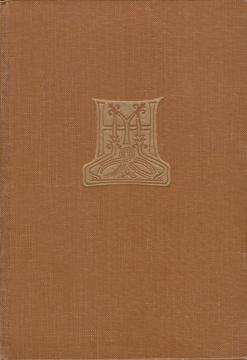
Knjiga bez predgovora
A collection of humorous stories, sketches, novellas and satirical writings with illustrations by Slavko Voroš. Light, witty prose about the Zagreb bourgeoisie and petty bourgeoisie.
Zvonimir Vukelić (1876–1947), known under the pseudonym Zyr Vukelić (or Zyr Xapula), was a Croatian writer, journalist, satirist and editor. The book Knjiga bez predgovora was published by Matica hrvatska in Zagreb in 1914. The drawings in the book were signed by the first professional Croatian caricaturist, Slavko Vereš (Vörös) (1887–1953), and the cover design, decorated in the Art Nouveau style, was done by Ljubo Babić.
The title is programmatic — the author himself ironically admits that he himself does not know exactly to which genre the texts in the book belong. In the preface (or rather, in the explanation of why there is no preface), Vukelić writes: "And if someone were to ask me what the readings in that book are — I would get into trouble myself. Are they short stories, sketches, novellas, one supposedly in verse, is there humor in some of them, or, God forbid, even satire — I don't believe in all that myself."
The book is a typical Vukelić work: a mixture of humoresques, satirical sketches, satires and light novels that vividly depict the Zagreb bourgeoisie, petty bourgeois habits, bureaucratic types, marital and family relationships and everyday Zagreb types from the beginning of the 20th century. The style is light, witty, ironic and satirical, with an emphasis on external descriptions of characters, dialogues and comic situations. Vukelić moves on the border between journalism and literature — his characters are usually small, insignificant people (officials, fat gentlemen, timid suitors, self-satisfied petty bourgeois), whom the author observes with mild irony and grotesque effects.
The work belongs to the author's earlier work, along with Humoristic Stories (1911) and Theatrical Chronicle (1913). Critics evaluate it as an entertaining, but not deep work — Vukelić successfully captures the atmosphere of the era and the Zagreb spirit, but often remains on the surface, without stronger plot development or psychological depth (he has been compared to Nušić, Matoš or Gogol, but without their power).
The book is today an antiquarian rarity and represents a good example of light, entertaining and satirical Croatian prose from the Austro-Hungarian period. It reflects Vukelić's wide popularity as a journalist and humorist who knew how to entertain a wide audience with sharp language and current topics. It fits into the tradition of Croatian humor and satire from the early 20th century.
One copy is available