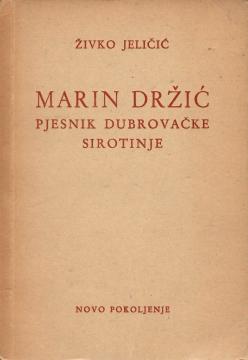
Marin Držić: pjesnik dubrovačke sirotinje
The book by Croatian writer and essayist Živko Jeličić is one of the most influential interpretations of Marin Držić. Jelčić interprets Držić as a writer close to the common people and a critic of the social injustices of the Dubrovnik Renaissance.
In his study, Jeličić develops the thesis that Držić should not be viewed only as a Renaissance comedy writer, but also as an author who, through his works, expressed the interests and feelings of the Rabbian people. Starting from social relations in the Rabbian Republic of the 16th century, the author depicts the conflict between nobility and ordinary citizens, and interprets Držić's comedies as criticism of privileged social classes. In this context, Držić becomes the poet of the Dubrovnik poor, that is, a writer who speaks about injustices, hypocrisy, and social differences through humor, satire, and colorful folk characters.
The study was based on Jeličić's earlier research on Držić and was part of a broader effort to interpret Renaissance Croatian literature through a social and historical perspective. The author himself emphasized that it was part of a more extensive study that he had previously published in a shortened form.
Although later literary historians have questioned some of Jeličić's conclusions, the book remains important in Croatian Držićology because it was among the first to systematically connect Držić's life, his political views, and literary characters with the social circumstances of Dubrovnik in his time. It thus opened space for new interpretations of Držić's oeuvre and his place in Croatian cultural history.
One copy is available