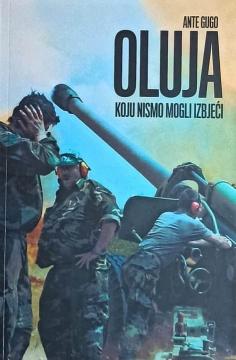
Oluja koju nismo mogli izbjeći
Rare book

Oluja koju nismo mogli izbjeći

Ante Gugo

Ante Gugo explains the breakup of Yugoslavia, the formation of the Croatian state, and the circumstances that led to Operation Storm through a chronological account of events from 1985 to 1995.

The Storm We Could Not Avoid is a non-fiction work by Croatian journalist and war correspondent Ante Gugo. The book deals with the political, social and military events that marked the last years of the existence of the SFR Yugoslavia and the process of creating an independent Republic of Croatia. The author seeks to explain the causes of the conflict and the circumstances that led to the Homeland War and the military-police operation Storm.

The work does not only describe Operation Storm itself, but also provides a broader overview of the events that preceded it. Gugo follows the development of political relations since the mid-1980s, the strengthening of national tensions, the collapse of the Yugoslav federation, and the war events in Croatia and Bosnia and Herzegovina. The book is designed as a Overview chronology covering the period from 1985 to August 1995.

The author uses various sources, including newspaper articles, memoirs, military publications and archival materials, trying to place the events in their historical and political context. Special attention is paid to the process of international recognition of Croatia, diplomatic efforts, war operations and the final actions that led to the liberation of the occupied territories.

The book is intended for a wide range of readers, especially those who want to better understand the circumstances of the emergence of the modern Croatian state. In a clear and accessible style, the author presents complex historical processes and encourages reflection on the causes of the war, its consequences and the importance of knowing recent Croatian history. Due to the abundance of facts, photographs and chronologically organized content, the work represents a valuable contribution to the literature on the Homeland War.

Editor
Žarko Ivković
Illustrations
Željko Šoletić
Dimensions
23 x 15 cm
Pages
388
Publisher
Večernji list, Zagreb, 2015.
 
Latin alphabet. Paperback.
Language: Croatian.

One copy is available

Condition:Used, excellent condition
 

Are you interested in another book? You can search the offer using our search engine or browse books by category.

You may also be interested in these titles

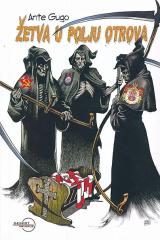
Žetva u polju otrova

Žetva u polju otrova

Ante Gugo

A suspenseful political-historical novel by Ante Guga from 2017. Through a mix of intelligence intrigues, war traumas and secrets from the past, the author exposes the dark side of modern Croatian politics and society.

Despot Infinitus d.o.o., 2017.
Croatian. Latin alphabet. Paperback.
7.98
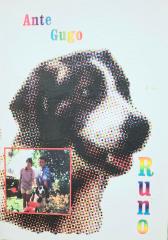
Runo

Runo

Ante Gugo

A suspenseful novel by Ante Guga from 2002. Through an exciting search for a mysterious object, the author combines elements of an action thriller, intelligence intrigue, and historical mysteries set in the domestic region.

Naklada Jurčić, 2002.
Croatian. Latin alphabet. Hardcover.
4.00
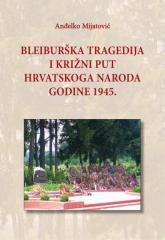
Anđelko Mijatović: Bleiburška tragedija i križni put hrvatskoga naroda godine 1945.

Anđelko Mijatović: Bleiburška tragedija i križni put hrvatskoga naroda godine 1945.

Anđelko Mijatović

The Bleiburg Tragedy and the Way of the Cross of the Croatian People in 1945 is a historical-documentary work by Croatian historian and university professor Anđelko Mijatović.

HSK, 2007.
Croatian. Latin alphabet. Paperback.
6.62
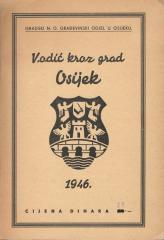
Vodič kroz grad Osijek

Vodič kroz grad Osijek

An important document reflecting the state of the city immediately after World War II. The guide served as a practical tool for orientation and informing citizens and visitors about the urban layout and infrastructure of the city at that time.

Gradski N. O., Građevinski odjel u Osijeku, 1946.
Croatian. Latin alphabet. Paperback.
64.28
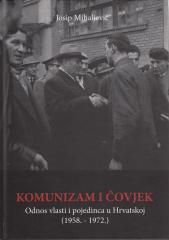
Komunizam i čovjek: Odnos vlasti i pojedinca u Hrvatskoj (1958.–1972.)

Komunizam i čovjek: Odnos vlasti i pojedinca u Hrvatskoj (1958.–1972.)

Josip Mihaljević

Josip Mihaljević's book analyzes the relationship between the government and the individual in communist Croatia (1958–1972), through repressive mechanisms, ideological pressures, and restrictions on personal freedom in the socialist system.

Hrvatski institut za povijest, 2016.
Croatian. Latin alphabet. Hardcover.
17.26
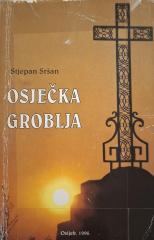
Osječka groblja

Osječka groblja

Stjepan Sršan

The book is deeply rooted in the local history and culture of Osijek, with an emphasis on cemetery motifs that serve as a metaphor for memory, death, and disappearance.

Povijesni arhiv u Osijeku, 1996.
Croatian. Latin alphabet. Paperback.
5.26