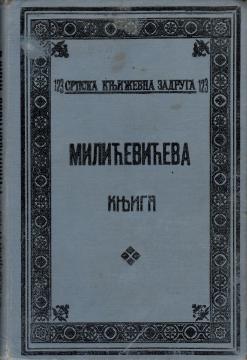
Milićevićeva knjiga
Rare book
Antique

Milićevićeva knjiga

Milan Đ. Milićević

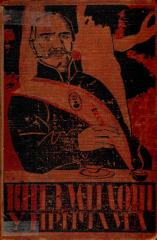
The posthumous edition of the SKZ from 1909 brings a selection of short stories by Milan Đ. Milićević, which depict life along the Drina River, hajduk legends, the world of the border guards and the fates of ordinary people, combining realism, folklore an

Milan Đakov Milićević was one of the most significant cultural figures of Serbia in the second half of the 19th century: a writer, ethnographer, educator, historian, travel writer and long-time public figure. He was among the founders of the Serbian Literary Cooperative, president of the Serbian Royal Academy and a tireless collector of folk traditions, customs and oral history. His works Principality of Serbia, Kingdom of Serbia and Memorial of Eminent People of the Serbian People have remained indispensable sources for studying the social and cultural history of the 19th century. Although literary criticism does not rank him among the greatest artists of his time, his value lies in his exceptional knowledge of the people, language and everyday life, which he conveyed in numerous stories and records. He died in 1908, and the Serbian Literary Cooperative published Milićević's book the following year as a kind of memorial collection with a selection of his stories.

The book begins with the texts "Milan Đ. Milićević" and "Milićević as a narrator", which serve as a literary and historical introduction and a kind of homage to the author. Seven stories follow: From Smrdan to Zvornik, Hajduci, Jedan sudni dan, Božana, Na karauli, Kvrga and Smrt Jovana Đak.

The plot of most of the stories is set in western Serbia and Podrinje, an area that Milićević knew well from his own travels and ethnographic research. In them, outlaws, border guards, peasants, merchants, priests and travelers meet, and the author pays special attention to folk customs, speech and moral values ​​of the society of the time. His characters are not idealized heroes but ordinary people whose destinies are shaped by poverty, honor, family ties, love, revenge, and historical circumstances.

Milićević's narrative method is based on simple and conversational language, often relying on oral tradition and local testimonies. This is precisely why these stories have a double value: literary and documentary. They preserve a picture of life in 19th-century Serbia and represent a precious record of the mentality, everyday life, and collective memory of a time. As a whole, the book is a valuable monument to Serbian realism and folk prose, but also a lasting reminder of Milićević's role as a chronicler of the national past.

Dimensions
19 x 13 cm
Pages
166
Publisher
Srpska književna zadruga (SKZ), Beograd, 1909.
 
Cyrillic alphabet. Paperback with dust jacket.
Language: Serbian.

One copy is available

Condition:Used, excellent condition
 

Are you interested in another book? You can search the offer using our search engine or browse books by category.

You may also be interested in these titles

Knez Miloš u pričama

Knez Miloš u pričama

Milan Đ. Milićević

"Prince Miloš in Stories" is a collection of 285 anecdotes and testimonies about Prince Miloš Obrenović. The short stories depict his character, political skills, cunning, humor, and role in the creation of modern Serbia.

Narodno delo, 1936.
Serbian. Cyrillic alphabet. Hardcover.
9.46
Dijalektika prijelaznog perioda

Dijalektika prijelaznog perioda

Viktor Pelevin

The book represents the author's anthology - the largest part is the novel Čisla (Čisla), followed by the short story Macedonian Criticism of French Thought and several short stories (Odin vog, Akiko, Fokus-grupa, Gost na prazniku bon).

Disput, 2006.
Croatian. Latin alphabet. Paperback.
9.687.26
Antologija poljske pripovijetke XX stoljeća

Antologija poljske pripovijetke XX stoljeća

Zdravko Malić

The anthology, edited and translated by Zdravko Malić, a leading Croatian Polish scholar and founder of the Polish Language Department at the Faculty of Fine Arts in Zagreb, represents a key selection of Polish short fiction from the 20th century.

Veselin Masleša, 1984.
Croatian. Latin alphabet. Hardcover with dust jacket.
7.245.07
Prvo šišanje

Prvo šišanje

Bohumil Hrabal

The First Haircut, a short story written in 1970 and published in 1976, is the first in a series of prose pieces by Bohumil Hrabal describing Nymburk, the town where he spent his childhood. In 1981, The First Haircut was adapted for the screen by Jiry Men

24 sata, 2007.
Croatian. Latin alphabet. Paperback.
7.24
Čudnovate zgode šegrta Hlapića

Čudnovate zgode šegrta Hlapića

Ivana Brlić-Mažuranić

The book The Strange Adventures of the Apprentice Hlapić is one of the most widely read novels for children by Ivana Brlić Mažuranić. It is a book for all time about the little, wise, brave and good apprentice Hlapić and his seven-day adventures.

Profil International, 2008.
Croatian. Latin alphabet. Hardcover.
13.42
Pripovijetke

Pripovijetke

Dinko Šimunović

The collection "Short Stories" brings a representative selection of Šimunović's most famous prose, in which he depicts the tragedy of human destinies and the subtle psychology of characters through motifs of the Dalmatian hinterland, childhood, and social

Profil International, 2009.
Croatian. Latin alphabet. Hardcover.
9.627.22