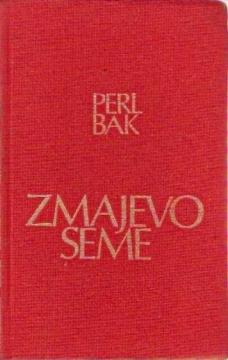
Sabrana dela 19: Zmajevo seme
The family of Chinese peasant Ling Tan faces the Japanese invasion in 1937. The war destroys their lives, changes customs and inspires resistance. A moving story of the courage, suffering and struggle of the Chinese people.
The novel Dragon Seed by Pearl S. Buck is a powerful story about a Chinese peasant family living in a village near Nanjing just before and during the Japanese invasion of China in 1937. The book depicts the impact of the Second Sino-Japanese War on ordinary people, their lives, customs, and family relationships.
The central character is Ling Tan, a wise and stubborn peasant who loves his country, and his wife Ling Sao. They have three sons (Lao Ta, Lao Er, and Lao San), a daughter Panxiao, and a daughter-in-law. The family lives a relatively peaceful life, farming the land and adhering to traditional values, until the war reaches their village.
The Japanese army brings horrors: looting, rape, murder, and destruction. Some family members flee to the city, some become collaborators, and others join the guerrilla resistance. The novel realistically depicts how war changes people — traditional roles are broken down, women become more active, and young people become radicalized. The depiction of Nanking and the horrors that followed the fall of the city (the so-called Nanking Massacre) is particularly poignant, although Buck focuses on the characters' reactions, not just on the events themselves.
Buck masterfully depicts the contrast between peaceful peasant life and the brutality of war. The novel highlights themes of resistance, the courage of ordinary people, the clash of tradition and modern reality, and the deep connection of the Chinese with the land. Dragon Seed symbolizes the strength of the Chinese people who, like the dragon, will survive and revive.
The book is part of a trilogy (continued with the novels The Promise and others) and one of Buck's most famous works about the war period. It was written during World War II (1942) and had a great influence on American public opinion about Chinese resistance to Japan. It is characterized by vivid characters, realistic depiction of everyday life, and deep empathy for the Chinese people, which is characteristic of Buck's prose. It is often highlighted as a powerful anti-war novel that shows how war destroys families, but also awakens new strength and solidarity.
Više primjeraka je u ponudi