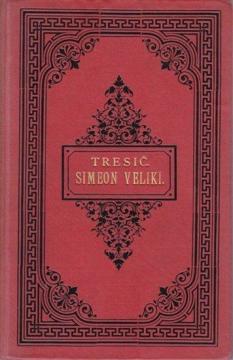
Simeon Veliki
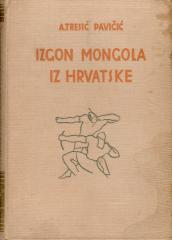
The work is a historical drama set in the first half of the 10th century, during the conflict between the Bulgarian Empire under Emperor Simeon I the Great and the Croatian Kingdom under King Tomislav. First edition.
The main character of this historical drama by Tresić is Simeon the Great, an ambitious Bulgarian ruler who strives for hegemony over the Balkan Slavs and the expansion of the empire at the expense of Byzantium and its neighbors. Opposite him stands Tomislav, the Croatian king who represents the idea of a Slavic confederation and equal cooperation of the Balkan tribes. The conflict between the two ideas – Bulgarian hegemony and Croatian confederation – forms the ideological core of the tragedy. Victory is on the side of the Croatian idea.
The tragedy includes both romantic and dynastic motifs: Simeon's daughter Rajna is in love with Tomislav and becomes the Croatian queen, which further complicates the relationship between father and son-in-law. The drama contains intrigues, war conflicts, betrayals (e.g. Serbian prince Zaharija) and ends with Simeon's defeat. Tomislav appears later in the drama (in Act 4, at the coronation on Duvnoj Field), but as a strong ideological and military force.
Tresić wrote the work by thoroughly studying *historical sources (Porfyrogenet, Byzantine chroniclers, Rački, Kukuljević, Jireček, etc.), almost as a scientific study, but with a patriotic and romantic approach. In the afterword, he clearly emphasizes the conflict of ideas: the hegemony of one tribe (Bulgarians) versus the confederation (Croats).
It was premiered in 1896 at the Croatian National Theater, but did not experience much theatrical success due to its epic length and more passive main character. The work belongs to a series of Tresić's historical dramas with national and classical motifs (Ljutovid Posavski, Katarina Zrinska, etc.). Today it is appreciated as an expression of Croatian romantic historicism of the late 19th century and a rare dramatic depiction of Croatian-Bulgarian relations in the Middle Ages.
One copy is available
- Slight damage to the cover