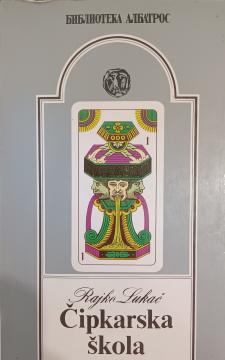
Čipkarska škola
Editor
Predrag Marković
Dimensions
20 x 12 cm
Pages
214
Publisher
Filip Višnjić, Beograd, 1988.
Distribution: 2,000 copies
Latin alphabet. Paperback.
Language: Serbian.
No copies available
The last copy was sold recently.
No copies available
The last copy was sold recently.
Are you interested in another book? You can search the offer using our search engine or browse books by category.
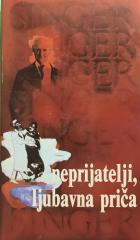
Enemies: A Love Story, perhaps Singer's best-known novel, takes place in New York in the 1950s.
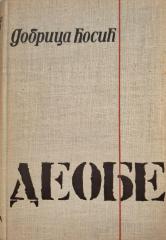
This work, awarded the NIN Prize for that year, is considered one of the most significant in Serbian literature after World War II.
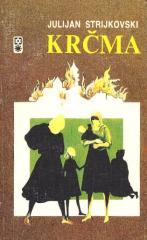
The book "Inn" by Julian Stryjkowski, published in 1977, explores life in a small Jewish village in Galicia during the 19th century.

Cronin's moving story of redemption. Robert Shannon, a fanatical doctor-researcher, sacrifices love and life for science, but in the end loses everything – his girlfriend, recognition, health – only to realize through suffering: medicine without humanity
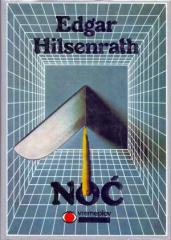
A poignant novel describing life in a Jewish ghetto in Ukraine, based on the author's experience as a Holocaust survivor. Set in the fictional town of Prokov, the novel follows the inhabitants of the ghetto, especially Raneko, as they struggle to survive.
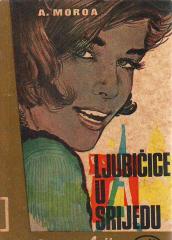
André Maurois, a French writer known for his psychological novels and biographies, explores themes of family relationships, love, and internal conflicts in this work, which is characteristic of his style.