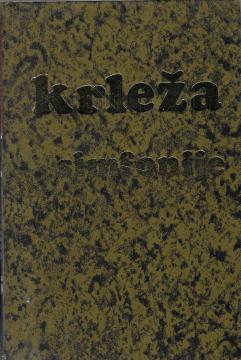
Simfonije 5: Simfonije

Symphonies (1933) is a cycle of six great poems by Krleža. Early, vitalistic, pantheistic poems charged with lush rhythm, sensual images, and an ecstatic experience of nature and life.
Miroslav Krleža's Symphonies represent one of the most powerful and specific cycles in early Croatian modernism. They are six longer poetic texts that Krleža published under this common title in 1933, although some were written as early as 1914, and the first ones appeared in the collection Three Symphonies in 1917. The cycle consists of: Pan, Podneva symphonija, Suton, Nocturne, Sodomski bakanale and Ulica u jesenje jutro.
Stylistically, Symphonies are ecstatic, oratorio poems charged with vitalistic ecstasy, a pantheistic sense of nature and cosmic rhythms. Here Krleža uses a lush, almost baroque language, rich in associations, metaphors and sound effects – the rhythm is charged, the syntax is often broken, and the images move from idyllic natural motifs to erotic, Dionysian and grotesque visions. The influences of Walt Whitman and Emil Verhaeren are evident in the broad breath, enumerations and the feeling of merging the individual with the universe.
Pan is dominated by the mythological motif of the god of nature observing the world in an autumnal, sensual atmosphere. Noon Symphony celebrates the fullness of life and the power of the sun. Sunset and Nocturne bring more melancholic, introspective tones of twilight and night. Sodomski bacchanal goes in the direction of orgiastic, demonic and destructive ecstasy, while Ulica u jesenje jutro brings a more urban, everyday scene imbued with the same intensity.
Although these are early works of the young Krleža, they already demonstrate his exceptional verbal power and tendency towards grandiose, symphonic forms that he would later develop in prose and drama. Critics often see them as the peak of his early lyricism – before he turned to sharper social engagement and irony (e.g. in Ballads of Petrica Kerempuh).
Today, Symphonies are appreciated as an exceptional example of Croatian expressionist vitalism: texts that do not strive for classical lyrical intimacy, but for orchestral power, where words are transformed into music, color, and movement. Symphonies are Krleža's earliest masterpiece in poetry – a monumental, somewhat pretentious, but ingeniously executed attempt to convey the fullness of existence through language.
No copies available
The last copy was sold recently.