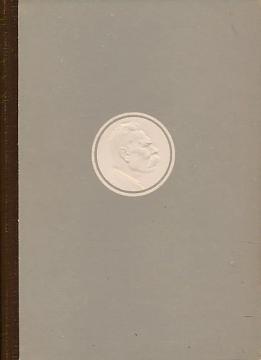
Djela #14: Bajke o Italiji / Ruske bajke / Balada o grofici Elen de Kursi

Djela #14: Bajke o Italiji / Ruske bajke / Balada o grofici Elen de Kursi

Maksim Gorki

"Tales of Italy" is a collection of short stories by Maxim Gorky, written during his stay in Italy at the beginning of the 20th century. "Russian Fairy Tales" is Gorky's interpretation of traditional Russian folk tales.

"Tales of Italy": In these stories, Gorky expresses his admiration for the Italian landscape, culture, and people, while exploring universal themes such as freedom, beauty, and human suffering. Through vivid descriptions and a lyrical style, the author evokes the atmosphere of Italian towns and villages, highlighting the contrast between poverty and wealth, tradition and modernity.

"Russian Fairy Tales": These stories reflect the spirit of the Russian people, their customs, beliefs, and moral values. Gorky uses archetypal characters and motifs from folklore to explore human nature, the conflict between good and evil, and the search for justice. His versions of fairy tales are often imbued with social commentary, reflecting the author's commitment to themes of social justice and equality.

Original title
Сказки об Италии
Editor
Ivana Duboković
Graphics design
E.Stepančić
Dimensions
20 x 14 cm
Pages
272
Publisher
Kultura, Zagreb, 1948.
 
Distribution: 10,000 copies
 
Latin alphabet. Hardcover.
Language: Croatian.

One copy is available

Condition:Used, excellent condition
 

Are you interested in another book? You can search the offer using our search engine or browse books by category.

You may also be interested in these titles

Moji univerziteti

Moji univerziteti

Maksim Gorki
Rad, 1959.
Serbian. Latin alphabet. Paperback.
0.99
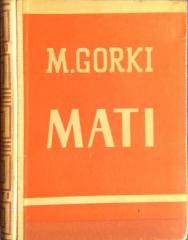
Mati

Mati

Maksim Gorki

Maxim Gorky's novel "Mother" was published in 1906 and is one of the key works of Russian social realism. The work depicts the awakening of the working class in Russia through characters and events that emphasize social injustices and the need for revolut

Glas rada, 1950.
Croatian. Latin alphabet. Hardcover with dust jacket.
4.36
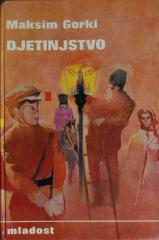
Djetinjstvo

Djetinjstvo

Maksim Gorki
Mladost, 1982.
Croatian. Latin alphabet. Hardcover.
2.99 - 3.98
Barun Ivica

Barun Ivica

August Šenoa

Baron Ivica depicts the disintegration of a peasant cooperative after the abolition of serfdom. Baron Ivica, a frivolous nobleman, exploits the peasants, leading to their moral and material decline. Šenoa criticizes the transitional society.

Hrvatsko književno društvo Sv. Jeronima, 1932.
Croatian. Latin alphabet. Hardcover.
6.34
Začarano ogledalo

Začarano ogledalo

Fran Galović

The Enchanted Mirror is a psychological novella by Fran Galović about a young intellectual torn between reality and his own perceptions. The motif of the mirror becomes a symbol of self-knowledge, illusion, and spiritual disintegration.

Društvo hrvatskih književnika, 1913.
Croatian. Latin alphabet. Hardcover.
13.56
Izabrane pripovetke

Izabrane pripovetke

Laza Lazarević

Selected stories by Laza Lazarević bring together prose of strong psychological and social sensitivity, depicting family, morality, love, and suffering within the framework of 19th-century Serbian realism.

SKD Prosvjeta, 1950.
Serbian. Cyrillic alphabet. Hardcover.
6.34