Djela #18: Moji univerziteti

Djela #18: Moji univerziteti

Maksim Gorki

In addition to the autobiographical work "My Universities", this volume also contains the autobiographical stories The Watchman, Korolenko's Age, On the Harmfulness of Philosophy and On First Love.

"My Universities", the third part of Maxim Gorky's autobiographical trilogy, completes the story of his coming of age and intellectual development. The novel begins with Alexei's arrival in Kazan, a city that for him represents a symbol of hope and intellectual progress. He is convinced that he will receive a formal education there and find a path to a better life. However, reality is harsh. Alexei has no means to pay for his education and is forced to do hard work to survive. While working as a manual laborer, Alexei begins to attend "universities of life" - informal gatherings of workers, intellectuals and political activists. These gatherings open the door for him to the world of literature, philosophy and ideas about social change. Through conversations and interactions with various people, Alexei gradually develops his revolutionary ideas and critical view of society. Despite hunger, poverty and constant struggles for survival, Alexei finds solace in books and learning. In the end, he comes to the realization that formal education is not the only path to knowledge. The life lessons he learned among people and through his own experiences become his true "universities." "My Universities" is not only a story of his personal development, but also a critique of society and the system that discourages the working class from getting an education. "My Universities" is a powerful conclusion to Gorky's autobiographical trilogy. This book emphasizes the value of independent learning, willpower, and the fight for justice, making it relevant even today.

Editor
Ljerka Morkić
Graphics design
E. Stepančić
Dimensions
20 x 14 cm
Pages
241
Publisher
Kultura, Beograd-Zagreb, 1949.
 
Distribution: 10,000 copies
 
Latin alphabet. Hardcover.
Language: Croatian.

Two copies are available

Copy number 1

Condition:Used, excellent condition

Copy number 2

Condition:Used, excellent condition
 

Are you interested in another book? You can search the offer using our search engine or browse books by category.

You may also be interested in these titles

Moji univerziteti

Moji univerziteti

Maksim Gorki
Rad, 1959.
Serbian. Latin alphabet. Paperback.
0.99
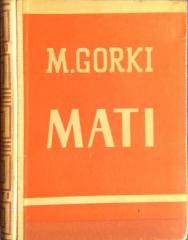
Mati

Mati

Maksim Gorki

Maxim Gorky's novel "Mother" was published in 1906 and is one of the key works of Russian social realism. The work depicts the awakening of the working class in Russia through characters and events that emphasize social injustices and the need for revolut

Glas rada, 1950.
Croatian. Latin alphabet. Hardcover with dust jacket.
4.36
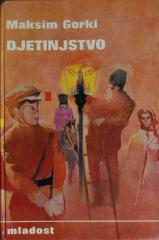
Djetinjstvo

Djetinjstvo

Maksim Gorki
Mladost, 1982.
Croatian. Latin alphabet. Hardcover.
2.99 - 3.98
Pažnja

Pažnja

Alberto Moravia

Francesco Merighi returns to Rome after 9 years abroad. In order to write an "authentic" novel, he keeps a diary of his life with his wife and their daughter Babe. He obsessively analyzes lies in relationships, the temptation of

Otokar Keršovani, 1966.
Croatian. Latin alphabet. Hardcover.
3.96
Život je negdje drugdje

Život je negdje drugdje

Milan Kundera

Jaromil, a young poet raised by a possessive mother, seeks a "real life" in poetry and revolution. His lyrical youth, love, and idealism lead him into conformity and betrayal of intimate relationships – he dies young and unfulfilled.

Znanje, 1979.
Croatian. Latin alphabet. Hardcover with dust jacket.
4.86
Moskva – Petuški

Moskva – Petuški

Venjedikt Jerofejev

Venedikt Yerofeyev's postmodern prose poem is today considered a classic of new Russian literature. It is compared to Gogol and Kharms for its poetics of absurdity, satire, and metaphysical depth.

LOM, 217.
Serbian. Cyrillic alphabet. Paperback.
11.24