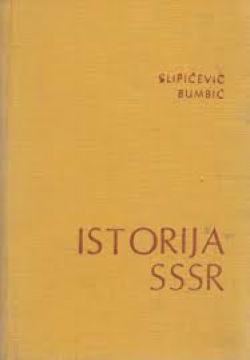
Istorija SSSR

Istorija SSSR

Fuad Slipčević, Aleksa Bumbić
Editor
Ljubo Sparavalo
Graphics design
Ognjen Vukelić
Dimensions
21 x 15 cm
Pages
414
Publisher
Zavod za izdavanje udžbenika, Sarajevo, 1969.
 
Latin alphabet. Hardcover.
Language: Serbian.

No copies available

The last copy was sold recently.
 

Are you interested in another book? You can search the offer using our search engine or browse books by category.

You may also be interested in these titles

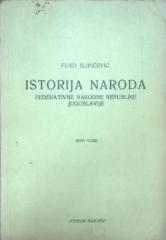
Istorija naroda Federativne Narodne Republike Jugoslavije: Novi vijek

Istorija naroda Federativne Narodne Republike Jugoslavije: Novi vijek

Fuad Slipčević
Veselin Masleša, 1958.
Croatian. Latin alphabet. Paperback.
4.99
Pola stoljeća povijesti Poljske: 1939.-1989. godine

Pola stoljeća povijesti Poljske: 1939.-1989. godine

Andrzej Paczkowski
Profil International, 2001.
Croatian. Latin alphabet. Hardcover.
14.2610.70
Komunizam i čovjek: Odnos vlasti i pojedinca u Hrvatskoj (1958.–1972.)

Komunizam i čovjek: Odnos vlasti i pojedinca u Hrvatskoj (1958.–1972.)

Josip Mihaljević

Josip Mihaljević's book analyzes the relationship between the government and the individual in communist Croatia (1958–1972), through repressive mechanisms, ideological pressures, and restrictions on personal freedom in the socialist system.

Hrvatski institut za povijest, 2016.
Croatian. Latin alphabet. Hardcover.
17.26
Zabrana školskog vjeronauka u doba komunizma

Zabrana školskog vjeronauka u doba komunizma

Marin Srakić
Katehetski salezijanski centar, 2000.
Croatian. Latin alphabet. Paperback.
7.32
Ljudi-miševi

Ljudi-miševi

Manuel Leguineche, Jesus Torbado

The book "Mice People" by Manuel Leguineche and Jesús Torbad is an extremely powerful testimony about human destinies during and after the Spanish Civil War (1936-1939).

Alfa, 1979.
Croatian. Latin alphabet. Hardcover with dust jacket.
6.32
Radni logor Valpovo 1945.-1946.: dokumenti

Radni logor Valpovo 1945.-1946.: dokumenti

Vladimir Geiger

The Valpovo labor camp (1945–1946) was the largest camp for Volksdeutschers in Croatia after World War II. About 4,000 Germans and Austrians were interned; at least 1,074 died, mostly from hunger, disease, and exhausting labor.

Njemačka zajednica podunavskih Švaba u Hrvatskoj, 1999.
Croatian. Latin alphabet. Hardcover.
27.34