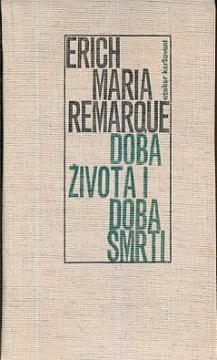
Doba života i doba smrti
The Age of Life and the Age of Death follows German soldier Ernst Graeber, who comes on leave during World War II and tries to find the meaning of life amidst destruction, love, and moral dilemmas.
The Age of Living and the Age of Death is a novel by German writer Erich Maria Remarque*, published in 1954. The story takes place during the last period of World War II. The main character Ernst Graeber is a German soldier who, after long months spent on the Eastern Front, returns home for a short leave. Instead of the home he remembers, he finds a city destroyed by bombing, his parents missing, and a population living in fear, deprivation, and uncertainty.
While trying to find traces of his family, Ernst meets Elisabeth Kruse, a young girl whose father ended up in a concentration camp for opposing the Nazi regime. A sincere love develops between them that becomes a rare source of hope in a world marked by destruction and death. Their marriage, concluded during Ernst's leave, symbolizes the desire for a normal life despite the war circumstances.
However, after the leave ends, Ernst must return to the battlefield, where he is once again confronted with violence, the senselessness of war, and his own moral dilemmas. He increasingly questions the responsibility of the individual, the value of human life, and the consequences of blind obedience to a totalitarian regime. The novel ends with his death, with which Remarque emphasizes how war destroys not only human lives but also love, the future, and hope.
The work strongly condemns war, violence, and ideologies that disregard human dignity, and is considered one of the most important anti-war novels of the 20th century.
Multiple copies are available