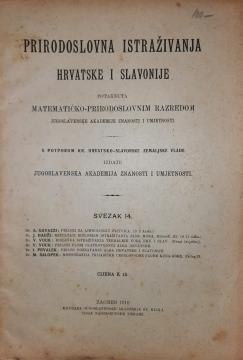
Prirodoslovna istraživanja Hrvatske i Slavonije: Svezak 14.
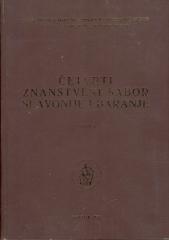
The collection Natural History Research in Croatia and Slavonia, volume 14, brings the results of natural history research in Croatia and Slavonia with works by six authors in the fields of limnology, biology, botany, and zoology.
Natural History of Croatia and Slavonia is a scientific collection that brings together key natural history works on Croatian and Slavonian waters, algae and fauna at the turn of the 19th/20th century. The publication was initiated in 1914 by the Mathematical and Natural History Department of the Yugoslav Academy of Sciences and Arts (JAZU), with the support of the Royal Croatian-Slavonian Provincial Government, and this volume was printed in Zagreb in 1919 as volume 14 of the series.
The collection brings together the works of six prominent researchers:
Dr. Andrija Gavazzi: contributions to the limnology of the Plitvice Lakes, including two maps and a systematic description of the hydrological, morphometric and ecological features of the lake system. Dr. Jovan Hadži: results of biological research on the Adriatic Sea (hydroids, III. continuation), with 11 illustrations; provides taxonomic descriptions, distribution and notes on the life cycles of hydroid cnidarians. Dr. Viktor Vouk: two papers – biological research of thermal waters of Croatia and Slavonia (second report), with a review of the chemistry, microflora and microfauna of the springs, and contributions to the flora of freshwater algae of Croatia, which provide lists of species, microscopic characteristics and findings by locality. I. Pevalek: a contribution to the knowledge of algae of Croatia and Slavonia, with emphasis on ecology, seasonal dynamics and geographical range of freshwater and aquatic habitats. Dr. M. Salopek: monograph of the Triadian cephalopod fauna of Kuna-Gora (appendix II), with fossil finds, stratigraphy and morphological descriptions of ammonites and their biostratigraphic value.
Volume 14 provides a cross-section of the then latest methodologies and field observations in limnology, marine biology, algology and paleontology. Cartographic contributions and illustrations enhance the documentary value, while systematic lists of species and localities make the work a reference source for further taxonomic and ecological research. Of particular importance are the contributions on Plitvice, which offer an early integrated view of the lake dynamics, and the works on thermal waters that link physical-chemical conditions with biological composition. The marine contributions expand the picture of the biodiversity of the Adriatic at that time, and the paleontological study anchors the volume in the broader geological context of the Dinaric area.
As a publication of the Croatian Academy of Sciences and Arts, the collection reflects the interdisciplinary spirit of early Croatian science: precise field recording, comparison of local and regional phenomena, and the effort to interpret natural phenomena as a whole – from modern ecosystems to the geological past. From a historical and scientific perspective, the volume represents a fundamental point for understanding the development of natural science in Croatia and Slavonia at the beginning of the 20th century.
One copy is available
- Traces of patina