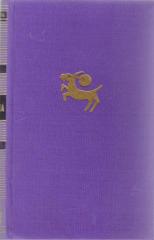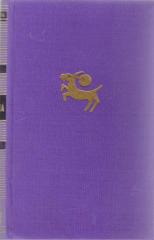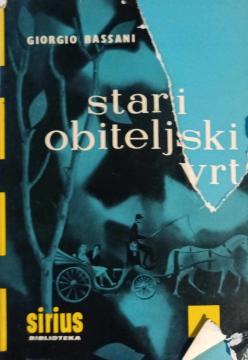
Stari obiteljski vrt

Stari obiteljski vrt

Giorgio Bassani

Giorgio Bassani's Italian historical novel, published in 1962, chronicles the relationship between the narrator and the children of the Finzi-Contini family from the rise of Benito Mussolini to the beginning of World War II.

The wealthy Jewish Finzi-Contini family, both in life and death, is separated from the rest of the world and difficult to enter. Their children are taught privately, and they spend their days playing tennis on a court located in the middle of a beautiful garden that is difficult to see, let alone enter, due to a high fence. The narrator, also Jewish, but less wealthy, falls in love with Micol Finzi-Contini, the rich man's darling, who is older than him and, just like the family garden, distant, unattainable and mysterious. Their love story, which consists mostly of longing, anticipation of meeting and waiting for the phone to ring, is one of the most beautiful ever written. Family tragedies, the increasingly ominous arrival of Nazism will afford the main character only moments of closeness with his love, moments that he will remember for the rest of his life.

Original title
Il giardino dei Finzi - Contini
Translation
Jerka Belan
Editor
Oto Šolc
Graphics design
Milan Vulpe
Dimensions
20 x 14 cm
Pages
234
Publisher
Mladost, Zagreb, 1964.
 
Latin alphabet. Hardcover with dust jacket.
Language: Croatian.

One copy is available

Condition:Used, very good condition
Damages or inconvenience notice:
  • Damaged book cover
  • Traces of patina
 

Are you interested in another book? You can search the offer using our search engine or browse books by category.

You may also be interested in these titles

Pinokio

Pinokio

Carlo Collodi

The gentle story of the turbulent adventures of a strange puppet made from a log by his father Geppetto has captured children's imaginations for over a hundred years.

Mozaik knjiga, 2001.
Croatian. Latin alphabet. Paperback.
5.984.78
U sjeni bregova

U sjeni bregova

Paola Drigo

The novel depicts the tragic fate of Mariuta (Marije Zef) and her younger sister Rosuta. The work shocked contemporaries with its boldness in depicting taboo subjects, and is today considered a classic portrait of female suffering in rural Italy.

Matica hrvatska, 1961.
Croatian. Latin alphabet. Hardcover with dust jacket.
5.32
Ravnodušni ljudi

Ravnodušni ljudi

Alberto Moravia

The novel follows the declining Roman bourgeois family of Ardengo over the course of several days: widow Mariagrazia, lover Leo, son Michele, and daughter Carla – all trapped in apathy, lies, sexual manipulation, and moral indifference.

Otokar Keršovani, 1966.
Croatian. Latin alphabet. Hardcover.
3.22
Rimske priče: izbor

Rimske priče: izbor

Alberto Moravia

Collections of short stories from Roman life in the post-war era: ordinary people from the people and the petty bourgeoisie – the poor, workers, small craftsmen – face misery, survival, jealousy, petty deceit and moral compromises in everyday life.

Otokar Keršovani, 1966.
Croatian. Latin alphabet. Hardcover.
3.98
Pažnja

Pažnja

Alberto Moravia

Francesco Merighi returns to Rome after 9 years abroad. In order to write an "authentic" novel, he keeps a diary of his life with his wife and their daughter Babe. He obsessively analyzes lies in relationships, the temptation of

Otokar Keršovani, 1966.
Croatian. Latin alphabet. Hardcover.
3.96
Rimljanka

Rimljanka

Alberto Moravia

Adriana, a beautiful Roman girl from a poor background, wants a normal life, but her mother pushes her into posing for painters and prostitution. Her love affairs lead her through betrayal, violence and corruption to her final resignation.

Minerva, 1959.
Serbian. Latin alphabet. Hardcover.
8.46