History of literature • Croatian literature
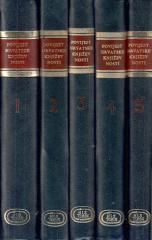
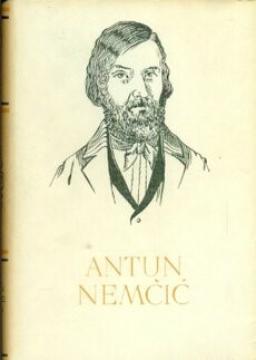
Pet stoljeća hrvatske književnosti: Antun Nemčić
Five centuries of Croatian literature: Antun Nemčić, volume 34. Travelogues - Human destiny - Leaven without bread - Articles and feuilletons.Prepared by Branimir Donat.
Editor
Marin Franičević
Dimensions
20 x 13.5 cm
Pages
360
Publisher
Zora, Matica hrvatska, Zagreb, 1965.
Latin alphabet. Hardcover with dust jacket.
Language: Croatian.
One copy is available
Condition:Used, good condition (visible signs of use)
A popular science book for young people about the history of writing, books, and printing — from prehistoric drawings to the modern printing press. A lively, accessible style by a Soviet author with illustrations by N. Lapshin.
Nakladni zavod Hrvatske, 1946.
Croatian. Latin alphabet. Paperback.
8.26 €
Croatian literature • History of literature • Literary Theory
The first part of Barč's history of Croatian literature provides an overview of the Illyrian movement, its writers, ideas and cultural significance in the period from the national revival to the creation of the Yugoslav state.
Jugoslavenska akademija znanosti i umjetnosti (JAZU), 1954.
Croatian. Latin alphabet. Hardcover with dust jacket.
This is one of the first synthetic analyses of the so-called Croatian fantasy generation (or "Borgesians", "young prose" with elements of fantasy) that appeared in the late 1960s and during the 1970s.
Zavod za znanost o književnosti Filozofskoga fakulteta, 2000.
Croatian. Latin alphabet. Paperback.
9.72 €
Croatian literature • History of literature • Literary Theory
An overview of the development of Croatian literature from the Middle Ages to the National Revival. Kombol presents the main authors, genres, and literary movements that shaped the foundation of the national tradition.
Matica hrvatska, 1945.
Croatian. Latin alphabet. Hardcover.
16.34 €
History of literature • Serbian literature • Biography
The title of the book In the Fire of the Worlds is a paraphrase of a sentence from Andrić's story "The Woman on the Stone" because, according to the author of this book, it best illustrates Andrić's political life: "To burn up without a trace, to lose one