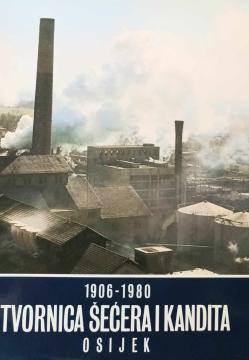
Tvornica šećera i kandita Osijek 1906-1980

Tvornica šećera i kandita Osijek 1906-1980

Josip Manc

The book is richly illustrated with photos and documents that further depict the history of the factory.

The book "Sugar and candy factory Osijek 1906 - 1980" provides a detailed overview of the history and development of the sugar and candy factory in Osijek. Here's a quick overview of the content:

  1. Establishment of the factory: The establishment of the factory in 1906 is described, including the reasons for its establishment and the first steps in production.
  2. Development through the decades: The development of the factory through different stages is shown, including technological innovations, expansion of production capacities and adaptations to market conditions.
  3. Economic and social impact: The impact of the factory on the local economy and society is analyzed, including employment, urbanization and social activities.
  4. Technological progress: The introduction of new technologies and production methods that improved the efficiency and quality of products is described.
  5. Cultural and sports activities: The factory's involvement in the organization of cultural and sports events for workers and the local community is shown.
  6. Challenges and adaptations: It describes how the factory overcame various challenges, including economic crises and changes in market conditions.

Translation
Marija Malbaša, Zorica Vladetić, Danica Kožić
Editor
Josip Manc
Illustrations
Božidar Grigić
Graphics design
Stjepan Kes
Dimensions
29.5 x 21 cm
Pages
135
Publisher
Tvornica šećera i kandita, Osijek, 1980.
 
Latin alphabet. Hardcover with dust jacket.
Language: Croatian.

No copies available

The last copy was sold recently.
 

Are you interested in another book? You can search the offer using our search engine or browse books by category.

You may also be interested in these titles

Vodič kroz grad Osijek

Vodič kroz grad Osijek

An important document reflecting the state of the city immediately after World War II. The guide served as a practical tool for orientation and informing citizens and visitors about the urban layout and infrastructure of the city at that time.

Gradski N. O., Građevinski odjel u Osijeku, 1946.
Croatian. Latin alphabet. Paperback.
64.28
Numizmatička povijest Rijeke

Numizmatička povijest Rijeke

Bože Mimica

This book covers the coins that circulated in the Rijeka area over a period of twenty-five centuries. Each period, from antiquity to 1918, is accompanied by a brief historical overview of Rijeka.

Povijesno društvo, 1997.
Croatian. Latin alphabet. Paperback.
17.9814.38
Braniteljsko zajedništvo putokaz hrvatskoga dostojanstva

Braniteljsko zajedništvo putokaz hrvatskoga dostojanstva

Vlado Čutura

The book, divided into four large sections, contains journalistic articles from Glas Koncila that have been written in recent years, as well as several previously unpublished texts.

Glas koncila, 2015.
Croatian. Latin alphabet. Paperback.
4.98
Iz kobnih dana

Iz kobnih dana

Milan Šenoa

A historical novel by Milan Šenoa, published in 1914. It is not only a historical narrative, but also a reflection on the enduring aspirations of the Croatian people for freedom and independence, making it a significant work in the corpus of Croatian lite

Nakladni zavod Matice hrvatske, 1971.
Croatian. Latin alphabet. Hardcover with dust jacket.
3.98
Hrvatska u arhivima izbjegličke vlade 1941-1943.: Izvještaji informatora o prilikama u Hrvatskoj

Hrvatska u arhivima izbjegličke vlade 1941-1943.: Izvještaji informatora o prilikama u Hrvatskoj

Ljubo Boban

Academician Ljubo Boban, in his work Croatia in the Archives of the Government in Exile 1941–1943, brings together a collection of diplomatic reports from various European and international representative offices of the Yugoslav government in exile during

Globus, 1985.
Croatian. Latin alphabet. Hardcover with dust jacket.
9.52
Nacionalni testament kralja Aleksandra I

Nacionalni testament kralja Aleksandra I

Branislav M. Stepanović

The author presents the political and ideological legacy of King Aleksandar I Karađorđević the Unifier. The book, published immediately after the king's death, is an attempt to preserve and transmit his political ideals to future generations.

Jugoslovenska biblioteka "Bratstvo", 1936.
Serbian. Cyrillic alphabet. Hardcover.
28.36