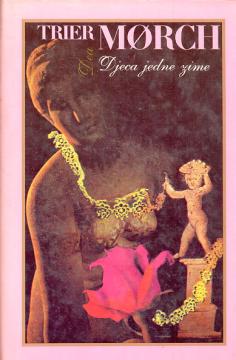
Djeca jedne zime

Djeca jedne zime

Dea Trier Morch

A documentary novel that follows the experiences of women in the maternity ward of Copenhagen City Hospital over the course of one month. The novel, in the form of a diary entry, follows the pregnancy and childbirth of six women at a gynecological clinic.

Through storytelling from the perspectives of different mothers, the author explores themes of motherhood, childbirth, social conditions, and women's emancipation in Denmark in the 1970s. The novel deals with the intimate and universal aspects of childbirth, depicting the joy, fear, pain, and solidarity among women.

The main characters are women from different social classes – from working women to intellectuals – whose stories intertwine in hospital rooms and delivery rooms. Mørch depicts the diversity of their experiences: some women experience childbirth as a triumph, while others go through loss or complications. The novel emphasizes the strength of the female community, but also criticizes social pressures, shortcomings in the health system, and gender inequality. Through simple but emotional language, the author records authentic conversations and feelings, making the reader a participant in these intimate moments.

The work stands out for its realistic depiction of childbirth and motherhood, without embellishment, and its strong feminist message about the importance of a woman's voice and experience. The novel is a significant contribution to Danish literature, celebrating life but also highlighting the challenges women face.

Original title
Vinterbørn
Translation
Mirko Rumac
Editor
Mirjana Buljan
Illustrations
Dea Trier Morch
Graphics design
Dea Trier Morch
Dimensions
20.5 x 14 cm
Pages
294
Publisher
Globus, Zagreb, 1987.
 
Distribution: 3,000 copies
 
Latin alphabet. Hardcover with dust jacket.
Language: Croatian.

Multiple copies are available

Copy number 1

Condition:Used, excellent condition

Copy number 2

Condition:Used, excellent condition

Copy number 3

Condition:Used, excellent condition
 

Are you interested in another book? You can search the offer using our search engine or browse books by category.

You may also be interested in these titles

Pisma Cosimu I. Mediciju 1566.

Pisma Cosimu I. Mediciju 1566.

Marin Držić

Držić's letters to Cosimo I de' Medici represent a significant document of Croatian Renaissance literature and history. Držić sent three letters to Cosimo I, Grand Duke of Tuscany, between June and August 1566, while he was staying in Florence.

Croatian P.E.N. Centre & Most / The Bridge, 1993.
Croatian. Latin alphabet. Paperback.
8.32
Ranjeni pejzaž

Ranjeni pejzaž

Vladimir Mičetić

A book by Vladimir Mičetić, a doctor and volunteer of the Homeland War from Kutina. The work was awarded the literary prize "We Were the First When It Was Necessary" for 2010, awarded by the Association of Croatian Homeland War Veterans.

Spiritus Movens, 2010.
Croatian. Latin alphabet. Hardcover.
11.52
Zaboravite da ste imali kćer

Zaboravite da ste imali kćer

Sandra Gregory, Michael Tierney

Sandra Gregory lived a life in Bangkok that one could only dream of until illness, unemployment and political unrest turned it into a nightmare.

Marjan tisak, 2003.
Croatian. Latin alphabet. Paperback.
7.825.99 - 7.987.82
I Jimmy se približava dugi 1-2

I Jimmy se približava dugi 1-2

Johannes Mario Simmel

A political and psychological drama set in Vienna between 1938 and 1969. Although inspired by real events from the West German metropolis between 1934 and 1965, the author changed the time and place of the action to protect the identities of real people.

Mladost, 1977.
Croatian. Latin alphabet. Hardcover with dust jacket.
The book consists of two volumes
6.74 - 8.64
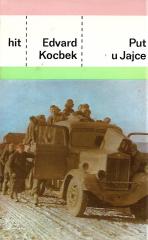
Put u Jajce

Put u Jajce

Edvard Kocbek

In Put u Jajce, Edvard Kocbek provides personal and political testimony about key moments in Yugoslav history. The book is based on Kocbek's memories from the Second World War, especially the trip to Jajce in 1943.

Znanje, 1978.
Croatian. Latin alphabet. Hardcover with dust jacket.
8.38