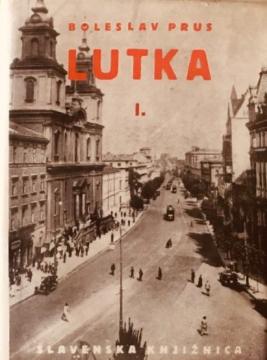
Lutka I-II

Lutka I-II

Boleslav Prus

"The Doll" by Bolesław Prusa (real name Aleksander Glowacki) is a novel that explores social and moral problems in Poland during the 19th century.

The main character, Stanisław Wokulski, a rich merchant, falls in love with a beautiful aristocrat, Izabela Łęcka. Their story is complex, imbued with themes of love, class and human psychology.

Wokulski struggles with his own ambitions and disappointments, while trying to find his place in a society that is often unfair and superficial. Through the characters and their relationships, Prus shows the conflicts between tradition and modernity, and social inequality.

The novel is known for its detailed depiction of the characters' psychological states and social circumstances, which gives Prus a strong impression of human nature and moral dilemmas. "The Doll" remains a significant work of Polish literature, reflecting deeply on the challenges of the time in which it was written.

Naslov originala
Lalka
Prevod
Julije Benešić
Dimenzije
20 x 14 cm
 
Knjiga se sastoji od dva toma.
Ukupan broj strana
889
Izdavač
Matica hrvatska, Zagreb, 1946.
 
Latinica. Tvrde korice s omotom.
Jezik: Hrvatski.

Nema primeraka u ponudi

Poslednji primerak je nedavno prodat.


Zanima Vas i neka druga knjiga? Možete pretražiti našu ponudu pomoću pretrage ili prelistati knjige po kategorijama.

Možda će Vas zanimati i ovi naslovi

Ulazeći u Varcar

Ulazeći u Varcar

Ivan Lovrenović

The hybrid book – a novel, poem and essay in one – is a dedication to his native Varcar, a small village in central Bosnia, where the author's roots intertwine with the history, myth and chaos of the 20th century.

Fraktura, 2016.
Hrvatski. Latinica. Tvrde korice s omotom.
14,42
Zagrepčanka

Zagrepčanka

Branislav Glumac

Branislav Glumac published a novel without periods or commas in 1974, as the relentless stream of thought of a young rebel. Published in socialist Yugoslavia, the work caused a scandal with its openness and became a classic about generational rebellion.

IROS, 1986.
Hrvatski. Latinica. Tvrde korice.
8,22 - 8,24
Andrićeva lestvica užasa

Andrićeva lestvica užasa

Svetislav Basara

A Serbian writer known for his satirical novels, Andrić's Ladder of Horrors dissects the Balkan mentality through a parable of Yugo-nostalgia and national myths. The title alludes to Ivo Andrić as a litmus test for criticism – Balkans claim him or reject

24 sata, 2021.
Srpski. Latinica. Broširano.
11,56
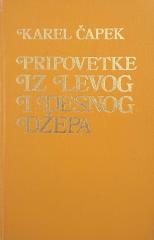
Pripovetke iz levog i desnog džepa

Pripovetke iz levog i desnog džepa

Karel Čapek

These stories deal with different topics, although most deal with different criminal acts, from fraud and fortune-telling to marriage fraud and murder.

Jugoslavijapublik, 1980.
Hrvatski. Latinica. Tvrde korice.
5,22
Deobe 1-3

Deobe 1-3

Dobrica Ćosić

This work, awarded the NIN Prize for that year, is considered one of the most significant in Serbian literature after World War II.

Prosveta, 1961.
Srpski. Ćirilica. Tvrde korice s omotom.
Knjiga se sastoji od tri toma
11,42
Deobe

Deobe

Dobrica Ćosić

Deobe is a novel about the tragic division of Serbs into Chetniks and Partisans during World War II. Winner of the NIN Award, it is part of a wider epic trilogy, inspired by Ćosić's experiences and historical documents.

Prosveta, 1963.
Hrvatski. Latinica. Tvrde korice s omotom.
13,74