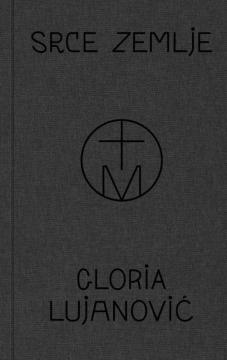
Srce zemlje

Srce zemlje

Gloria Lujanović

Gloria Lujanović wrote about the suffering of Croats in Central Bosnia as a young journalist. In the book Heart of the Country, the author speaks from a very personal perspective about the events that marked the lives of the generation that was just born

With this intimate essay-poetic dedication to victims and survivors, Gloria Lujanović gave a voice to those who were forgotten and hushed up by everyone.

"The sentence with which Glorija Lujanović begins her poignant book Heart of the Country ("In my family, time was divided into before and after the war"), is the best description of a mentality characteristic of Bosnia and Herzegovina as a whole, which the author emphasizes already in the next sentence. , which is both deep and superficial, Glorija Lujanović gives a broader picture of an era, with the help of which it is partially possible to detect the causes of today's almost pre-apocalyptic state in the world a kind of uncompromising and self-imposed redemption towards those who suffered (and still suffer) more than the author herself and her family.And for that you have to be infinitely empathetic and able to empathize with the sufferings of others, which is an extremely rare phenomenon today. from the foreword by Josip Mlakić

Editor
Anita Milićević, Gordana Farkaš Sfeci
Illustrations
Petra Franjić
Graphics design
Lana Cavar, Narcisa Vukojević
Dimensions
20 x 13 cm
Pages
164
Publisher
Oceanmore, Zagreb, 2023.
 
Latin alphabet. Hardcover.
Language: Croatian.
ISBN
978-9-53332-175-2

No copies available

The last copy was sold recently.
 

Are you interested in another book? You can search the offer using our search engine or browse books by category.

You may also be interested in these titles

Katastrofe

Katastrofe

Books and writers mark catastrophes on the map, catastrophes of the wars of the nineties, catastrophes of the Holocaust, catastrophes as words from the street and television, traffic that is a catastrophe, the price of carrots that is a catastrophe, catas

MeandarMedia, 2024.
Croatian. Latin alphabet. Paperback with dust jacket.
17.98
Dnevnici, 2. svezak: 1912-1914.

Dnevnici, 2. svezak: 1912-1914.

Franz Kafka

The second volume of Kafka's diaries covers the crucial years 1912–1914. This volume is a bridge between the early sketches and the mature novels, and the fragments are raw, aphoristic, full of self-mutilation, but also ingenious introspection.

Tim press, 2022.
Croatian. Latin alphabet. Paperback.
16.34
Ulazeći u Varcar

Ulazeći u Varcar

Ivan Lovrenović

The hybrid book – a novel, poem and essay in one – is a dedication to his native Varcar, a small village in central Bosnia, where the author's roots intertwine with the history, myth and chaos of the 20th century.

Fraktura, 2016.
Croatian. Latin alphabet. Hardcover with dust jacket.
14.4211.54
Mrka kapa

Mrka kapa

Aristid Teofanović

Mrka kapa is a book of short prose written under the pseudonym Aristid Teofanović, used by Slobodan Blagojević. Blagojević is also known by the heteronym Anhel Antonić (poetry) and other works under his real name.

Feral Tribune, 2001.
Croatian. Latin alphabet. Paperback.
9.36
Objektivni korelativi: tuga - mržnja - radost

Objektivni korelativi: tuga - mržnja - radost

Dalibor Cvitan

A posthumous collection published on the occasion of the 25th anniversary of the death of Dalibor Cvitan (1934–1993), a prose writer, poet, essayist and critic. It contains a selection of around twenty essays, short stories and feuilletons - a cross-secti

Društvo hrvatskih književnika, 2018.
Croatian. Latin alphabet. Paperback.
6.32
Poezija i zbilja

Poezija i zbilja

Johann Wolfgang Goethe

Goethe's greatest autobiographical prose, written between 1811 and 1833, covers his life from his birth in 1749 in Frankfurt to 1775, when he went to Weimar at the invitation of Duke Karl August.

Matica hrvatska, 1953.
Croatian. Latin alphabet. Hardcover with dust jacket.
18.42