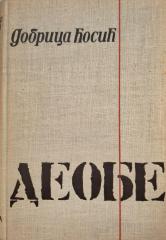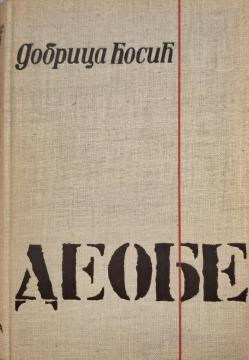
Deobe 1-3

Deobe 1-3

Dobrica Ćosić

This work, awarded the NIN Prize for that year, is considered one of the most significant in Serbian literature after World War II.

The trilogy is set during World War II and follows the internal conflicts within the Serbian people, especially between the Chetniks and the Partisans. Through the fates of various characters, Ćosić explores the complexity of ideological divisions, moral dilemmas, and personal tragedies that emerged from these conflicts. The main protagonists face difficult choices between loyalty to traditional values and the necessity of adapting to new ideologies. Through their stories, the author shows how political divisions led to the fragmentation of communities and families, emphasizing the tragic consequences of war on an individual and collective level. "Divisions" stands out for its deep psychological analysis of the characters and realistic depiction of the horrors of war. Ćosić's writing style allows readers to understand the complexity of human relationships in extreme circumstances, providing insight into universal themes such as betrayal, courage, love, and loss. This trilogy remains relevant today, reminding us of the importance of understanding the past in order to avoid repeating the same mistakes in the future.

Editor
Živorad Kravljanac
Graphics design
Mića Popović
Dimensions
19.5 x 14 cm
Pages total
1115
Publisher
Prosveta, Beograd, 1961.
 
Cyrillic alphabet. Hardcover with dust jacket.
Language: Serbian.

The book consists of 3 volumes.

Jedan višetomni primjerak je u ponudi.
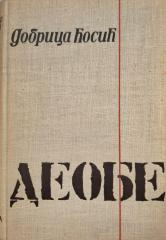
Deobe 1-3
Volume 1
Pages: 466
Condition:Used, very good condition
Damages or inconvenience notice:
  • Traces of patina
  • The cover is missing
Deobe 1-3
Volume 2
Pages: 329
Condition:Used, very good condition
Damages or inconvenience notice:
  • Traces of patina
  • The cover is missing
Deobe 1-3
Volume 3
Pages: 320
Condition:Used, very good condition
Damages or inconvenience notice:
  • Traces of patina
  • The cover is missing
 

Are you interested in another book? You can search the offer using our search engine or browse books by category.

You may also be interested in these titles

Otpadnik

Otpadnik

Dobrica Ćosić

The trilogy "The Time of Evil" by Dobrica Ćosić presents a different reflection on the turning events that led to the civil war in the middle of the 20th century and the birth of socialist Yugoslavia from the ashes of the old regime. The Apostate is the s

BIGZ, 1986.
Serbian. Cyrillic alphabet. Hardcover with dust jacket.
11.82 - 13.42
Grešnik

Grešnik

Dobrica Ćosić

The Sinner (1985), the first part of the Time of Evil trilogy, is a historical novel set in Serbia between the two world wars. The novel follows the fate of intellectual Ivan Katić, exploring themes of ideological conflict and the breakdown of social valu

BIGZ, 1985.
Serbian. Cyrillic alphabet. Hardcover with dust jacket.
11.74
Bajka

Bajka

Dobrica Ćosić

"Bajka", as time goes by, is revealed as one of the key and best places in Ćosić's prose, the originator of dystopian thinking in Serbian literature, which, a few decades later, was joined by Pekić's "1999" and Basara's "Ukleta zemlja".

BIGZ, 1988.
Serbian. Cyrillic alphabet. Hardcover.
8.32
Proces

Proces

Franz Kafka

Kafka wrote The Process between 1914 and 1915, published posthumously in 1925. The novel is unfinished but with an added final chapter by Max Brod. Edition with a foreword by B. Živojinović and an afterword by Walter Killi.

BIGZ, 1990.
Serbian. Latin alphabet. Paperback.
4.26
Magična ljubavna kutijica

Magična ljubavna kutijica

Santa Montefiore

The Magic Love Box (2002) follows the life story of Federica Campione, which begins in Vina del Mar, Chile, in the summer of 1982. Montefiore creates an epic story of growth, where the magic is not only in the box, but in the courage to let go of the past

Mozaik knjiga, 2006.
Croatian. Latin alphabet. Hardcover.
7.34
Andrićeva lestvica užasa

Andrićeva lestvica užasa

Svetislav Basara

A Serbian writer known for his satirical novels, Andrić's Ladder of Horrors dissects the Balkan mentality through a parable of Yugo-nostalgia and national myths. The title alludes to Ivo Andrić as a litmus test for criticism – Balkans claim him or reject

24 sata, 2021.
Serbian. Latin alphabet. Paperback.
11.56