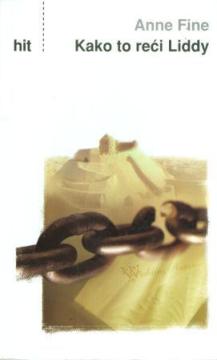
Kako to reći Liddy: jetka komedija

Kako to reći Liddy: jetka komedija

Anne Fine

Imagine four sisters who share everything from shopping marathons and family dinners to the most intimate secrets. Heather, Bridie, Stella and Liddy Palmer – unbreakable, loyal, impenetrable. Or so they think...

How to Say It Liddy is a novel by British author Anne Fine, known for her sharp humor and insightful analyses of family relationships. The story centers on the four Palmer sisters** – Heather, Bridie, Stella, and Liddy – who have believed their entire lives to be bound together by an unbreakable family bond. They meet regularly, share secrets, and help each other, creating the impression of a perfectly harmonious family.

The plot begins when one of the sisters learns disturbing information about Liddy's new partner. The others are faced with a difficult question: should Liddy tell the truth and risk her happiness, or keep quiet and thus become a party to a possible deception? What initially seems like a simple moral dilemma gradually develops into a series of conflicts, accusations, and old grudges that have been simmering beneath the surface for years.

As the arguments become more heated, it is revealed that the sisters are not as close as they believed. Each of them carries their own frustrations, jealousies, and unspoken grievances. It is especially interesting how the author depicts the process of disintegration of family illusions: one seemingly innocuous problem gradually reveals a whole network of hidden emotions and unresolved relationships.

Anne Fine skillfully combines humor, irony and psychological analysis. Although the novel is full of witty dialogues and comic situations, its core is a serious reflection on truth, loyalty and the limits of family love. How to say Liddy shows how strong and fragile family ties are at the same time and how a single secret can change relationships that seemed indestructible.

Original title
Telling Liddy: A Sour Comedy
Translation
Zdenka Drucalović
Dimensions
19 x 12 cm
Pages
213
Publisher
Znanje, Zagreb, 1998.
 
Latin alphabet. Paperback.
Language: Croatian.

One copy is available

Condition:Used, excellent condition
 

Are you interested in another book? You can search the offer using our search engine or browse books by category.

You may also be interested in these titles

Život je negdje drugdje

Život je negdje drugdje

Milan Kundera

Jaromil, a young poet raised by a possessive mother, seeks a "real life" in poetry and revolution. His lyrical youth, love, and idealism lead him into conformity and betrayal of intimate relationships – he dies young and unfulfilled.

Znanje, 1979.
Croatian. Latin alphabet. Hardcover with dust jacket.
4.86
Čovjek sa bezbroj imena

Čovjek sa bezbroj imena

Graham Greene

Young Victor Baxter grows up under the guardianship of the mysterious Captain and the woman who gives him a new name – Jim. His search for the truth about their identities leads him to discoveries about love, betrayal and his own life.

Znanje, 1989.
Croatian. Latin alphabet. Hardcover with dust jacket.
4.76 - 5.36
Zoe

Zoe

Momo Kapor

The novel "Zoe" (1978), one of Momo Kapor's most popular works, follows Arsen Lero, a 39-year-old art historian from the fictional Republic of Kosiliya – a small island under an authoritarian regime.

Znanje, 1978.
Croatian. Latin alphabet. Hardcover with dust jacket.
6.38
Kako biti stranac

Kako biti stranac

George Mikes

How to Be a Foreigner by George Mikes is a humorous book in which the author, as an immigrant from Hungary, humorously describes British customs, mentality, and everyday life from the perspective of a foreigner.

Znanje, 1980.
Croatian. Latin alphabet. Hardcover with dust jacket.
5.42
Put u Jajce

Put u Jajce

Edvard Kocbek

In Put u Jajce, Edvard Kocbek provides personal and political testimony about key moments in Yugoslav history. The book is based on Kocbek's memories from the Second World War, especially the trip to Jajce in 1943.

Znanje, 1978.
Croatian. Latin alphabet. Hardcover with dust jacket.
8.38
Sva moja braća

Sva moja braća

Milo Dor

The book follows the turbulent life of the Zanović brothers from Budva in the 18th century, famous for their adventures at European courts. The focus is on Stjepan Zanović, a charismatic but controversial figure, a Freemason and friend of Casanova, and th

Znanje, 1987.
Croatian. Latin alphabet. Hardcover with dust jacket.
4.28