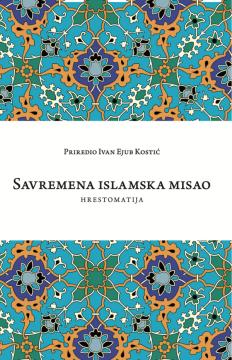
Savremena islamska misao: hrestomatija
The collection brings together key texts by Muslim thinkers of the 20th and 21st centuries. The work presents the development of modern Islamic ideas, their reception in the world, and their relationship to the West, religion, and politics.
Contemporary Islamic Thought: A Chrestomathy edited by Ivan Ejub Kostić is a unique anthology of texts by leading Muslim theologians, philosophers, and social thinkers of the modern era. The book brings together 37 works by key Muslim thinkers (el-Faruqi, Davutoğlu, Osman, Safi, Ramadan, Hanafi, Nasr, Qaradawi, and others), providing readers with insight into the fundamental ideas that have shaped Islamic theology, politics, and culture from the mid-20th century to the present day.
The Chrestomathy provides an overview of different approaches within Islamic thought — from reformist and modernist to traditionalist and Sufi interpretations. In the introductory study, Kostić offers an orientation through complex topics: the relationship between Islam and modernity, the issue of secularism, the position of women, the democratization of Islamic societies, and dialogue with Christianity and the West. The book does not advocate a single view, but rather opens up space for understanding the plurality of Islamic responses to the challenges of the contemporary world.
These authors represent a wide spectrum - from political theory, through law and ethics, to philosophy, science and interreligious dialogue. The textbook covers topics such as the Islamic state, sharia in a modern context, women's rights, economics, science and relations with the West.
The afterword by Milan Vukomanović (religionist) provides a critical, academic view outside the Muslim context, analyzing the collection's contribution to the understanding of Islam in the modern world and its significance for the Balkan and European areas.
The book is a valuable resource for students, researchers, and anyone interested in understanding how Muslim thought responds to global challenges, offering diverse, often conflicting perspectives within the Islamic intellectual scene.
One copy is available