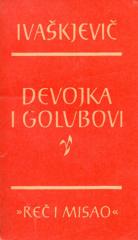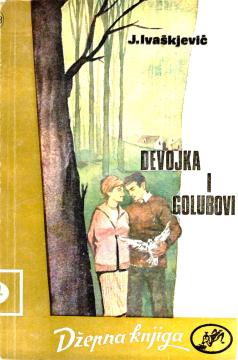
Devojka i golubovi
Young Edek lives with his elderly father who tries to keep his son by his side. The boy's longing for freedom and a girl clashes with his father's possessiveness. The pigeons symbolize unattainable freedom. The conflict leads to a tragic ending.
“The Girl and the Pigeons” is one of the most famous stories by Jaroslav Iwaśkiewicz (1894–1980), published in 1955 in the magazine “Twórczość”. The story takes place in post-war Poland (probably the 1950s), in a family home where a father – a lonely engineer-architect – lives with his younger son Edek. The father, aware of his own old age and fear of loneliness, unconsciously becomes possessive of his son, wanting to keep him with him as long as possible. Edek, a young man in the process of maturing, feels an increasing inner longing for freedom, love and independence – embodied in the image of a girl and symbolically in the pigeons flying freely above the house.
Iwaśkiewicz subtly builds a psychological conflict: the father does not realize how much he is stifling his son, and the son cannot express his rebelliousness without feeling guilty. The pigeons – the birds that the boy watches and feeds – become a metaphor for unattainable freedom, youthful longing and transience. The story culminates in a tragic clash of generations: the father feels that “tragedy is approaching” and that life will take his son away from him, while Edek tries to break free from this emotional trap.
The story is a classic example of Iwaśkiewicz’s style: lyrical, introspective, with a deep dive into the human psyche, subtle symbolism and a sense of melancholic inevitability. There is no pathos, but a quiet but powerful drama of family relationships and the transience of life. The story was based on the 1973/74 TV film “Dziewczyna i gołębie” (dir. Barbara Sass) starring Jadwiga Jankowska-Cieślak and Andrzej Seweryn.
One copy is available