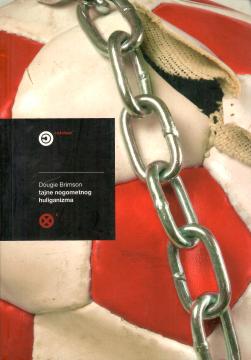
Tajne nogometnog huliganizma: Kako se mijenjala slika nogometnog nasilja

Tajne nogometnog huliganizma: Kako se mijenjala slika nogometnog nasilja

Dougie Brimson

A sharp analysis of the phenomenon of football hooliganism. A historical overview from the beginnings to the 2000s, the causes, methods, organization of groups, police measures and why violence persists despite bans. An honest, controversial inside look.

It is a classic work by a British author and former fan/hooligan who became the world's most famous chronicler. Brimson (b. 1959, ex-RAF) writes sharply, honestly and without embellishment – ​​from an "inside" perspective, but with distance. The book provides a historical overview: from the early incidents in the 19th century and the 1960s/70s (the beginning of organized "firms"), through the peak of the 80s (Heysel 1985, Hillsborough 1989), to the changes after the Taylor report, CCTV, travel bans and new forms of violence in the 2000s.

The author elaborates on the causes (class conflicts, tribalism, adrenaline, alcohol, rivalry), methods (organized meetings, "off" clashes outside the stadium, infiltration, mobile phones), group structure ("companies" such as ICF West Ham, Headhunters Chelsea) and how hooliganism has adapted to repression (from open battles to secret agreements). He emphasizes in particular that hooliganism is not just "problematic youths" - but often adults, working people for whom it is a "hobby" and identity.

The book criticizes the media (which sensationalize), the police (which sometimes exaggerate) and the clubs (which profit from passion, but condemn violence). Brimson argues that hooliganism has not disappeared - it has only changed and become more sophisticated. The style is direct, cynical, full of anecdotes and "inside" insights - not an academic study, but a provocative confession/analysis.

Original title
Barmy Army: The Changing Face of Football Violence
Translation
Dragana Grozdanić
Editor
Lovorka Čuljak
Dimensions
23 x 16 cm
Pages
198
Publisher
Celeber, Zagreb, 2006.
 
Latin alphabet. Paperback.
Language: Croatian.

One copy is available

Condition:Used, excellent condition
 

Are you interested in another book? You can search the offer using our search engine or browse books by category.

You may also be interested in these titles

Radoičić

Radoičić

Tonko Maroević, Berislav Valušek, Radovan Marčić
Adamić, 1998.
Croatian. Latin alphabet. Hardcover.
19.84
Županija požeško - slavonska

Županija požeško - slavonska

Dubravko Jelčić, Marin Topić
Kerschoffset, 1997.
Croatian. Latin alphabet. Hardcover.
8.68
Monografija učeničkih domova Republike Hrvatske

Monografija učeničkih domova Republike Hrvatske

Vladimir Rosić

This monograph provides a detailed overview of boarding schools in Croatia, their history, development and role in education.

Graftrade, 2001.
Croatian. Latin alphabet. Hardcover.
8.22
Ljubuški kraj, ljudi i vrijeme

Ljubuški kraj, ljudi i vrijeme

Proceedings of the scientific symposium held in Ljubuški on August 11 and 12, 1995.

Naša djeca, 1996.
Croatian. Latin alphabet. Hardcover.
10.38
Ljubo de Karina

Ljubo de Karina

Berislav Valušek

Ljubo de Karina (born 1948 in Rakalj, Istria) is a Croatian sculptor known for his monumental works in stone, especially Istrian limestone, but also bronze and wood.

Moderna galerija, 1997.
Croatian. Latin alphabet. Paperback.
9.988.98
Pazin

Pazin

Petar Strčić

Pazin is a town in central Istria, known for its rich history and natural beauty. It is located above the karst abyss of Pazinska jama, into which the river Pazinčica plunges.

Skupština općine Pazin, 1982.
Croatian. Latin alphabet. Hardcover with dust jacket.
15.62