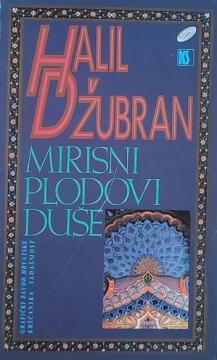
Mirisni plodovi duše
Fragrant Fruits of the Soul (the title of the Croatian edition) is a collection of poetic prose, aphorisms, meditations, and lyrical fragments. Like other early works, it exudes mystical longing, a spiritual rebellion against materialism, and a search for
1,304 The central theme is slavery – man is enslaved to life, fear, social norms, the past, the future, and even the very desire for eternity. People live in chains of habits, false ideals, and superficial joys, which bring them humiliation by day and tears by night. Gibran contrasts this with the liberation of the soul through the acceptance of pain, longing for the unattainable, and inner awakening.
Key motifs:
- Longing as a noble force – it is better to long for perfection than to live without passion.
- The duality of life – bitter and sweet, loss and finding, darkness and light go together (“Whenever I lost a friend in the mist of heaven, I found him in the dawn of morning”).
- Night as a time of inspiration, as opposed to the day of slavery.
- Love, friendship, and art as paths to the true present – not captured by the past or illusory eternity.
- Nature (the scent of flowers, wind, rivers) symbolizes spiritual freedom and the fruits of the soul.
Gibran does not offer solace in escaping suffering, but in its enlightening effect: from suffering the strongest souls are born, and from weakness – wisdom. The book is an intimate, almost prayerful confession – an invitation for the soul to be freed from its shackles and to blossom like a fragrant fruit that nourishes others.
The collection is a poetic critique of modern slavery and a hymn to spiritual awakening, written in simple but deeply penetrating language.
One copy is available