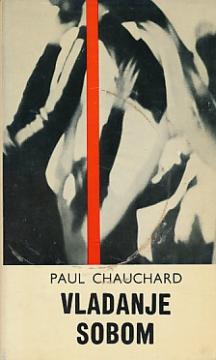
Vladanje sobom: Psihofiziologija volje
True self-mastery is not a fight against oneself, but a wise cooperation with one's own nature — by knowing the brain, body, and psychological laws, one achieves greater inner freedom, peace, and effectiveness in life.
The book starts from the assumption that the will is not a mystical or purely spiritual force, but the result of complex psychophysiological processes in the brain. Chauchard relies on the works of greats such as Pavlov, Lapicque and other researchers of the nervous system, explaining the role of the cerebral cortex, inhibitory mechanisms and the balance between excitation and inhibition. He particularly emphasizes the prefrontal cortex as the center of higher functions – planning, decision-making and self-control – which allow a person to overcome instincts and impulses.
The author shows that true maîtrise de soi (self-control) is not repression or violent suppression of nature, but a harmonious cooperation of mind and body. He explains how fatigue, stress and an unbalanced nervous system weaken the will, and offers practical methods for strengthening mental discipline: conscious breathing, attention training, proper management of emotions, rest and hygiene of life. The book criticizes the modern diseases of civilization – overload, anxiety and loss of control – and advocates neuropedagogy, education aimed at developing the brain's mechanisms of self-control.
Chauchard's approach is humanistic and holistic: the will develops through awareness, repetition of good habits, and ethical orientation. The book combines biology, psychology, and philosophy (with an emphasis on Christian anthropology, since Chauchard was a committed Catholic). It emphasizes that humans are beings capable of sublimating energies—transforming primitive urges into higher goals—which is the key to happiness, productivity, and a moral life.
The work is written in an accessible style, intended for a general audience, but with enough scientific precision to interest even experts. At the time of its publication (in the 1960s), it represented a bridge between contemporary neuroscience and self-help, predating modern books on mindfulness, emotional intelligence, and cognitive-behavioral techniques. Readers find in it concrete tools for everyday life: how to deal with habits, delay gratification, maintain focus, and live in accordance with one's values.
Self-Mastery is a classic work of Christian and scientific psychology that emphasizes that true freedom lies precisely in self-mastery – not in subjugating impulses, but in consciously directing life towards higher goals. Still relevant today for all who seek a deep understanding of the will beyond superficial self-help recipes.
One copy is available
- Traces of patina