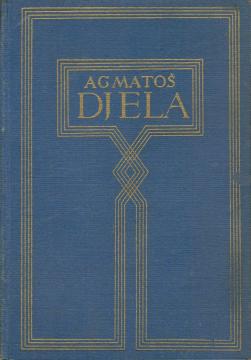
Djela 3: Umorne priče
The third volume of Barč's critical edition of the Works of A. G. Matoš (1935–1940) contains the collection Umorne priče (1909), mature short stories and sketches with themes of fatigue, love, death, satire, and modern life.
As with the previous two volumes, the literary legacy was compiled by Matoš's brother Milan Matoš, and Antun Barac edited the texts according to established philological principles: comparison of variants, orthographic standardization, and short, precise Notes on the genesis of the stories.
Umorne priče (originally 1909, published by Mirko Breyer) is Matoš's third and last collection of prose published during his lifetime, after a nine-year break in literary publishing. It contains 18 stories/short stories (e.g. About You and Me, Balcony, Autumn Idyll, Flower from the Crossroads, Beautiful Jelena, Killed!, The Road to Nothing, Shadow, etc.), most of which the author had previously published in magazines. The collection represents the mature phase of Matoš's storytelling — more introspective, melancholic, and pessimistic compared to the earlier Iverje and Novo iverje.
The stories vary in themes: intimate love dramas, the decadence of modern man, the weariness of existence, the satire of society, fantastic and symbolic elements, and the motifs of death, mirrors, shadows and transience. Here Matoš strongly shows the influences of Edgar Allan Poe (fantasy, psychological depth), Mérimée (conciseness) and Maupassant (realistic satire), but integrates them into an original Croatian modernist expression. The style is refined, artistry combined with lyricism and irony; the stories often balance between dream and reality, reality and symbols. The title Tired Stories reflects Matoš's personal and generational sense of fatigue, decadence and disappointment in Croatian reality after his return from emigration.
In Barč's edition, the collection is placed after the early prose collections (Works 1) and essay books (Works 2), which clearly shows the evolution of Matoš's oeuvre: from witty sketches to essays to mature, tired, but masterfully crafted prose. This is a key work for understanding Matoš as a novelist — a master of the short form who enriched Croatian literature with European modernist achievements. The collection influenced later Croatian prose (expressed subjectivism, psychology, stylistic virtuosity).
Barč's 1936 edition made Umorne priče part of a systematic collected opus and preserved them in a reliable form. Today they are considered the pinnacle of Matoš's prose during his lifetime, full of lyricism, irony and deep human melancholy, and remain relevant due to the universal themes of loneliness, love and transience in the modern world. An indispensable reading for studying Croatian modernism.
One copy is available