Narcis i Zlatousti
Rare book

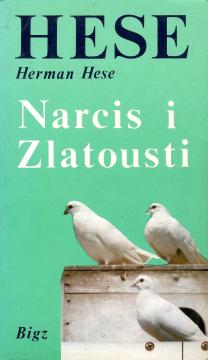
Narcis i Zlatousti

Hermann Hesse
Hesse

In the novel Narcissus and Chrysostom, Hermann Hesse follows two friends: the ascetic monk Narcissus and the artistically restless Chrysostom, who search for the meaning of life through wanderings, love, and suffering.

Narcissus and Chrysostom is a novel by Hermann Hesse that explores the relationship between spirit and body, reason and emotion, asceticism and the passions of life. The plot begins in the medieval Mariabronn monastery, where two young men with completely different personalities meet. Narcissus is serious, thoughtful and devoted to the spiritual life. He believes in order, discipline, knowledge and service to God. Chrysostom, on the other hand, is sensitive, beautiful, instinctive and open to the world of the senses. Although his father sends him to a monastery to become a monk, Narcissus quickly recognizes that Chrysostom is not made for monastic life.

Their friendship becomes crucial for Chrysostom. Narcissus helps him realize that his true nature is not to be found in renunciation of the world, but in experience, love, art and contact with life. Chrysostom leaves the monastery** and sets off on a long journey. Along the way, he meets women, passion, beauty, death, illness and violence. His life becomes a series of powerful experiences, but also painful losses. Through encounters with people and through his own mistakes, he gradually matures and begins to understand the transience of everything earthly.

An important part of the novel is Chrysostom's discovery of his artistic calling. In a sculptor, he finds a teacher and realizes that he can shape what he has experienced. Art allows him to transform the experiences of love, motherhood, death, and longing into lasting forms. However, even art does not bring him complete peace. He remains torn between the desire for freedom and the need for meaning.

In the end, Chrysostom returns to Narcissus, now the abbot of the monastery. Their reunion shows that no path in life is complete in itself. Narcissus represents spirit, thought, and faith, and Chrysostom represents sensuality, creativity, and experience. The novel does not give a simple answer about which path is right, but rather depicts man as a being seeking a balance between opposing forces. Through the two of them, Hesse speaks about friendship, art, transience, and the need for everyone to find their own truth.

Original title
Narziß und Goldmund
Translation
Branimir Živojinović
Editor
Vidosav Stevanović
Graphics design
Rade Rančić
Dimensions
18 x 10.5 cm
Pages
301
Publisher
BIGZ, Beograd, 1986.
 
Latin alphabet. Paperback.
Language: Serbian.

Two copies are available

Copy number 1

Condition:Unused

Copy number 2

Condition:Used, excellent condition
 

Are you interested in another book? You can search the offer using our search engine or browse books by category.

You may also be interested in these titles

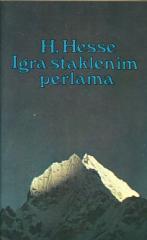
Igra staklenim perlama

Igra staklenim perlama

Hesse
Hermann Hesse

In der abgeschiedenen Provinz Kastalien wird Josef Knecht zum Meister des Glasperlenspiels. Doch geistige Vollkommenheit wirft Fragen nach der Verantwortung gegenüber dem Leben außerhalb der Gelehrtenwelt auf.

Sveučilišna naklada Liber (SNL), 1979.
Croatian. Latin alphabet. Hardcover with dust jacket.
9.30 €
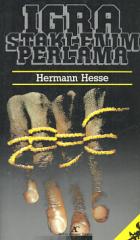
Igra staklenim perlama

Igra staklenim perlama

Hesse
Hermann Hesse

In der abgeschiedenen Provinz Kastalien wird Josef Knecht zum Meister des Glasperlenspiels. Doch geistige Vollkommenheit wirft Fragen nach der Verantwortung gegenüber dem Leben außerhalb der Gelehrtenwelt auf.

August Cesarec, 1987.
Croatian. Latin alphabet. Paperback.
8.326.24 €
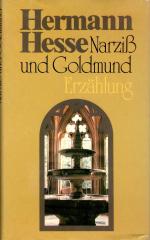
Narziß und Goldmund

Narziß und Goldmund

Hesse
Hermann Hesse

In seinem Roman „Narziss und Chrysostomus“ begleitet Hermann Hesse zwei Freunde: den asketischen Mönch Narziss und den künstlerisch unruhigen Chrysostomus, die durch Wanderungen, Liebe und Leiden nach dem Sinn des Lebens suchen.

Suhrkamp Verlag, 1971.
German. Latin alphabet. Hardcover with dust jacket.
7.42 €
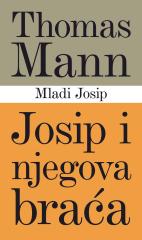
Josip i njegova braća II: Mladi Josip

Josip i njegova braća II: Mladi Josip

Mann
Thomas Mann

The second part of the tetralogy by German Nobel Prize winner Thomas Mann, Joseph and His Brothers, is entitled Young Joseph. This tetralogy is considered one of the most important works by Thomas Mann, as well as by German literature of the twentieth cen

Fraktura, 2009.
Croatian. Latin alphabet. Hardcover with dust jacket.
27.34 €
Izabrane pjesme / Ausgewählte Gedichte

Izabrane pjesme / Ausgewählte Gedichte

Goethe
Johann Wolfgang Goethe

A representative selection from the lyrics of Goethe, one of the greatest European poets, encompassing key phases of his work – from Sturm und Drang, through the classical Weimar period to his late poems.

Matica hrvatska, 2012.
Croatian. Latin alphabet. Paperback.
5.32 €
Homo faber

Homo faber

Max Frisch

Homo Faber by Max Friš is one of the most important and most read books of the 20th century: engineer Valter Faber believes in his rational view of the world, which is permanently shattered by a 'love story'.

Bratstvo-Jedinstvo, 1962.
Serbian. Latin alphabet. Hardcover.
3.16 €