Kako je čovjek postao div

Kako je čovjek postao div

Mihailo J. Iljin, Elena Aleksandrova Segal

A popular science story about the history of mankind — from prehistoric man to modern civilization, about the struggle with nature, discoveries, and the progress of technology and knowledge. A classic Soviet work for young people and a wider audience.

The work How Man Became a Giant by Soviet authors Mikhail Yakovlevich Ilyin (real name Ilya Yakovlevich Marshak) and his wife Elena Aleksandrovna Segal is one of the most famous popular science works intended for children, youth and the general public in the post-war period.

The book begins with a powerful image: a giant lives on Earth — a man — who lifts locomotives, travels thousands of kilometers a day and flies above the clouds. The authors then explain how this “giant” came into being. The authors trace the history of humanity chronologically and thematically: from primitive people, the discovery of fire, tools and agriculture, through ancient civilizations, the Middle Ages, great geographical discoveries, the Industrial Revolution, all the way to modern scientific achievements.

Special emphasis is placed on man’s struggle with nature, the accumulation of knowledge, technical progress and the collective work of the masses as the engine of history — in line with the Marxist worldview, but written in a lively, narrative style that brought Ilyin great popularity.

The style is dynamic, full of interesting anecdotes, comparisons and picturesque descriptions — typical of Ilyin's books (Black on White, Stories about Things, etc.). The work is intended primarily for young people (often used as reading material), but it is also read by adults because it is accessible and inspiring.

In Yugoslavia in 1949, this book perfectly fit into the post-war spirit of optimism, faith in science and the construction of a new society. It was part of a wider wave of Soviet popular science literature that was translated and disseminated in the early years of socialist Yugoslavia.

Original title
Как человек стал великаном
Translation
Krsto Radović
Editor
Malik Mulić
Graphics design
Raul Goldoni
Dimensions
20 x 14 cm
 
The book consists of two volumes.
Pages total
745
Publisher
Novo pokoljenje, Zagreb, 1949.
 
Latin alphabet. Hardcover.
Language: Croatian.

No copies available

The last copy was sold recently.
 

Are you interested in another book? You can search the offer using our search engine or browse books by category.

You may also be interested in these titles

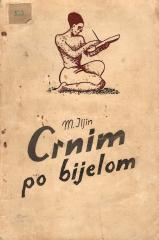
Crnim po bijelom – priče o knjigama

Crnim po bijelom – priče o knjigama

Mihailo J. Iljin

A popular science book for young people about the history of writing, books, and printing — from prehistoric drawings to the modern printing press. A lively, accessible style by a Soviet author with illustrations by N. Lapshin.

Nakladni zavod Hrvatske, 1946.
Croatian. Latin alphabet. Paperback.
8.26
Civilizacija

Civilizacija

Kenneth Clark
Mladost, 1972.
Croatian. Latin alphabet. Hardcover with dust jacket.
18.76
Ciklus svemirskih katastrofa: Potopi, požari i skapavanja u povijesti civilizacije

Ciklus svemirskih katastrofa: Potopi, požari i skapavanja u povijesti civilizacije

Richard Firestone, Allen West, Simon Warwick-Smith

The book is the most readable and complete overview of the evidence that human civilization has already been nearly wiped out of the universe once – and that such cycles may repeat themselves every few tens of thousands of years.

Stari grad, 2007.
Croatian. Latin alphabet. Hardcover.
21.2214.85 - 21.3414.94
James Cook

James Cook

Werner Forman, Ronald Syme
Mladost, 1973.
Croatian. Latin alphabet. Hardcover with dust jacket.
14.3211.46
Kraj vremena: Revizija proročanstva Maya

Kraj vremena: Revizija proročanstva Maya

Adrian Gilbert

British author Adrian Gilbert (co-author of The Mayan Prophecies from 1995) in The End of Time offers the most thorough and sober modern interpretation of the Mayan calendar and the so-called "2012 prophecy", completely rejecting New Age hysteria.

Stari grad, 2009.
Croatian. Latin alphabet. Hardcover.
18.2212.75 - 18.2412.77
Arktička pradomovina Veda

Arktička pradomovina Veda

Bal Gandahar Tilak

The book The Arctic Homeland of the Vedas (1903) by the Indian scholar Tilak proposed the hypothesis that the ancient Aryans, the authors of the Rigveda, originated in the Arctic region. Although controversial, the book remains important in the study of V

NIRO Književne novine, 1987.
Serbian. Latin alphabet. Paperback.
17.56