Rat planeta

Rat planeta

Herbert G. Wells
Wells

H.G. Wells's *The War of the Worlds* is a science fiction novel about a Martian invasion of Earth. Superior extraterrestrial invaders cause panic and destruction, and humanity faces a fight for survival.

The War of the Worlds (1898) is a renowned science fiction novel by the English writer H. G. Wells, one of the founding figures of modern science fiction. The work depicts a sudden invasion of Earth by inhabitants of Mars and challenges humanity's belief in its own superiority over nature and other forms of life.

The story begins in England, where, following unusual astronomical phenomena, cylindrical objects from Mars descend to Earth. Extraterrestrial beings possessing terrifying technology emerge from them. Their massive tripod war machines, deadly heat rays, and poisonous gases wreak havoc against which the human military is virtually powerless.

The story is narrated by an unnamed witness attempting to survive the chaos, find safety, and comprehend the events that are shattering the established order. Through his experiences, Wells portrays fear, panic, the collapse of social structures, and the fragility of human civilization.

The novel transcends the scope of a mere adventure story by offering a powerful critique of colonialism and imperialism. The plight of humans facing the technologically superior Martians mirrors the fate of peoples confronted by conquerors, thereby leading Wells to question the right of the strong to subjugate the weak.

The work derives its special value from its tense atmosphere, convincing descriptions of catastrophe, and scientific imagination. The novel's conclusion highlights the unexpected importance of natural processes and the limits of technological power.

The War of the Worlds has become a classic of world science fiction and inspired numerous radio, film, and television adaptations. Its themes of survival, technological superiority, and human vulnerability remain relevant today.

Original title
The War of the Worlds
Translation
Albin Vilhar
Dimensions
19.5 x 14 cm
Pages
190
Publisher
Tehnička knjiga, Beograd, 1951.
 
Latin alphabet. Paperback.
Language: Serbian.

One copy is available

Condition:Used, good condition (visible signs of use)
Damages or inconvenience notice:
  • Yellowed pages
  • Traces of patina
 

Are you interested in another book? You can search the offer using our search engine or browse books by category.

You may also be interested in these titles

Novi svet: Lik stvari koje dolaze

Novi svet: Lik stvari koje dolaze

Wells
Herbert G. Wells

Wells' vision of the future depicts the collapse of the old world, global wars, and the creation of a new world state based on science, technology, and the planned organization of society. A history of the future with 68 images.

Narodno delo, 1931.
Serbian. Cyrillic alphabet. Hardcover.
19.99 €
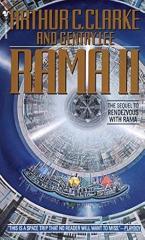
Rama II

Rama II

Arthur C. Clarke, Gentry Lee

The sequel to Rendezvous with Rama: the only SF novel to sweep all SF awards and one of the best sellers of all time.

Bantam books, 1990.
English. Latin alphabet. Paperback.
13.42 €
E.T. došljak iz Svemira

E.T. došljak iz Svemira

William Kotzwinkle

He is three million light years away from home, completely alone and in need of a friend...

Centar za informacije i publicitet (CIP), 1983.
Croatian. Latin alphabet. Hardcover.
5.22 €
Mačonoša

Mačonoša

John White

John Wilson was excited about his thirteenth birthday for two reasons: the first was that he would be greeted at home by his grandmother's delicious cake, and the second was that his grandmother would finally reveal the secret about his parents.

STEPress, 2002.
Croatian. Latin alphabet. Hardcover.
9.988.98 €
Zavolio sam divlju ženu

Zavolio sam divlju ženu

Pierre Boulle

The novel originally titled La Planete des singes, which was the basis for the 1968 film Planet of the Apes.

Epoha, 1965.
Croatian. Latin alphabet. Hardcover with dust jacket.
5.98 €
Slavna budućnost naše zemlje

Slavna budućnost naše zemlje

Mirko Golubić

The book is a genre of popular science literature with elements of technological vision and futurism, characteristic of the era in which it was created – the time of the Cold War, the space race, and great expectations from science.

Znaci vremena, 1972.
Croatian. Latin alphabet. Paperback.
2.98 €