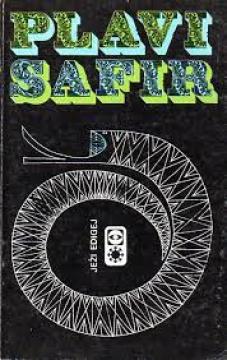
Plavi safir

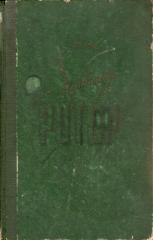
Plavi safir

Ježi Edigej
Translation
Petar Vujičić
Graphics design
Nikola Masniković
Dimensions
18 x 11.5 cm
Pages
154
Publisher
BIGZ, Beograd, 1975.
 
Latin alphabet. Paperback.
Language: Croatian.

One copy is available

Condition:Used, good condition (visible signs of use)
Damages or inconvenience notice:
  • Damaged covers
 

Are you interested in another book? You can search the offer using our search engine or browse books by category.

You may also be interested in these titles

Potop

Potop

Henryk Sienkiewicz

The Deluge, one of the most significant works of Polish and world historical literature, epically depicts the dramatic period of the Swedish Deluge in the Polish-Lithuanian Commonwealth in 1655–1660.

Hrvatsko književno društvo Sv. Jeronima, 1941.
Croatian. Latin alphabet. Hardcover.
8.42
Quo vadis?

Quo vadis?

Henryk Sienkiewicz

The novel Quo Vadis is a historical saga set in Rome during the reign of Emperor Nero. Written with epochal breadth, the work explores the conflict between early Christianity and decadent Roman society, with a love story at its center.

Otokar Keršovani, 1965.
Croatian. Latin alphabet. Hardcover with dust jacket.
8.926.69
Nečista posla

Nečista posla

Marek Hlasko
Grafički zavod - Titograd, 1965.
Serbian. Latin alphabet. Paperback.
4.98
Snoviđenja nad zalivom San Francisko

Snoviđenja nad zalivom San Francisko

Czesław Miłosz
Dečje novine, 1982.
Serbian. Latin alphabet. Paperback.
4.36
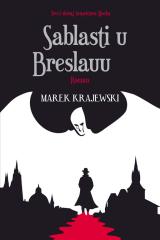
Sablasti u Breslauu

Sablasti u Breslauu

Marek Krajewski

Ghosts of Breslau is the third installment in the celebrated series about Inspector Eberhard Mock, thanks to which Polish writer and classical philologist Marek Krajewski has been recognized worldwide as one of the canonical, full-blooded writers of histo

Fraktura, 2010.
Croatian. Latin alphabet. Paperback.
12.58
Devojka i golubovi

Devojka i golubovi

Jaroslaw Iwaszkiewicz

Young Edek lives with his elderly father who tries to keep his son by his side. The boy's longing for freedom and a girl clashes with his father's possessiveness. The pigeons symbolize unattainable freedom. The conflict leads to a tragic ending.

Svjetlost, 1965.
Serbian. Latin alphabet. Paperback.
2.14