Oslobođeni žali
Rare book
Antique

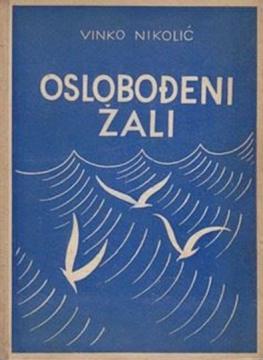
Oslobođeni žali

Vinko Nikolić

One of the most significant collections of Croatian poetry from the period of World War II. The poems bring intimate, nostalgic and patriotic lyrics imbued with motifs of homeland, sea, mother, faith and liberation from the burden of the past.

Oslobođeni žali (1943) is a collection of poetry by Vinko Nikolić (1912–1997), a poet, essayist and journalist from Šibenik. Published in Zagreb, with a cover by the painter Mladen Veža, it is considered one of the highlights of his early work.

The collection brings mature, melancholic and emotionally powerful poems in which Nikolić sings about his homeland (Šibenik and the Šibenik area), the sea, his mother, love, faith and transience. The title Oslobođeni žali symbolizes liberation from inner burdens, regret and pain, and the pursuit of spiritual peace and freedom. The poems are written in a distinctive language that combines Šibenik Čakavica with Štokavian elements, which gives his lyrics a special warmth and authenticity.

Nikolić's poetry in this collection is characterized by a classical form, deep emotional charge and strong patriotic and religious motifs. As in previous collections (Proljetna svitanja, Svijetli putovi, Moj grad), the poet intertwines the personal and the national, creating a lyrical biography imbued with nostalgia and hope.

Oslobođeni žali is today appreciated as an important part of Croatian poetry of the 20th century, especially in the context of the war and post-war period. The collection is rare and sought after among lovers of classical Croatian lyric poetry.

Graphics design
Mladen Veža
Dimensions
20 x 15 cm
Pages
88
Publisher
Matica hrvatska, Zagreb, 1943.
 
Latin alphabet. Hardcover.
Language: Croatian.

One copy is available

Condition:Used, good condition (visible signs of use)
Specificity of this instance:
Ex Libris
Damages or inconvenience notice:
  • Damaged back
  • Traces of patina
 

Are you interested in another book? You can search the offer using our search engine or browse books by category.

You may also be interested in these titles

Tarzan kao majmun

Tarzan kao majmun

Edgar Rice Burroughs

Prvi i najpoznatiji roman u čuvenoj seriji o Tarzanu. Siroće engleskog plemića odgajaju majmuni u afričkoj prašumi. Tarzan postaje njihov vođa, uči da govori i susreće ljude, Džejn i civilizaciju, ali ostaje gospodar džungle.

St. Kugli, 1932.
Croatian. Latin alphabet. Hardcover.
13.24
Radovi na krovu: sedam džepnih krimića

Radovi na krovu: sedam džepnih krimića

Pavao Pavličić

Seven short, independent stories in the "pocket crime novel" format by the master of Croatian crime fiction: fast, tense, concise, with unexpected twists and Pavličić's typical blend of everyday life and crime.

Narodna knjiga, 1984.
Croatian. Latin alphabet. Paperback.
4.26
Dva srca: Roman jednog braka

Dva srca: Roman jednog braka

Miriam Delly

Two Hearts is a touching love story about a young French aristocrat, a widower, who wants to enter into a marriage of convenience with a young and noble girl. However, fate and true love bring him face to face with great trials...

Hrvatsko književno društvo Sv. Jeronima, 1928.
Croatian. Latin alphabet. Hardcover.
9.34
Tarzan gospodar zvjeradi

Tarzan gospodar zvjeradi

Edgar Rice Burroughs

The third novel in the famous Tarzan series. Tarzan's enemies kidnap his son and Jane, leaving him trapped on a deserted island. With the help of beasts (apes, panthers, and lions), Tarzan takes revenge and saves his family.

St. Kugli, 1933.
Croatian. Latin alphabet. Hardcover.
9.44
Gola maja

Gola maja

Vicente Blasco Ibanez

The famous painter Mariano Renovales, the son of a blacksmith, rises to fame in Rome, Paris and Madrid. Obsessed with his love for women and art, he paints his "Naked Maya", which leads to drama, jealousy and conflict.

Zabavna biblioteka - Naklada tiskare Narodnih novina, 1924.
Croatian. Latin alphabet. Hardcover.
7.42
Sam protiv njih

Sam protiv njih

Roman Leljak

A non-fiction work by a Slovenian investigator of the UDB archives. The author, a former KOS employee, left the army after learning about the crimes of the Yugoslav army during the war and the post-war period, and dedicated himself to exposing the secret

Vlastita naklada, 1990.
Croatian. Latin alphabet. Paperback.
16.42