Oslobođeni žali
Rare book
Antique

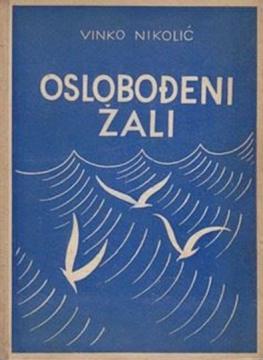
Oslobođeni žali

Vinko Nikolić

One of the most significant collections of Croatian poetry from the period of World War II. The poems bring intimate, nostalgic and patriotic lyrics imbued with motifs of homeland, sea, mother, faith and liberation from the burden of the past.

Oslobođeni žali (1943) is a collection of poetry by Vinko Nikolić (1912–1997), a poet, essayist and journalist from Šibenik. Published in Zagreb, with a cover by the painter Mladen Veža, it is considered one of the highlights of his early work.

The collection brings mature, melancholic and emotionally powerful poems in which Nikolić sings about his homeland (Šibenik and the Šibenik area), the sea, his mother, love, faith and transience. The title Oslobođeni žali symbolizes liberation from inner burdens, regret and pain, and the pursuit of spiritual peace and freedom. The poems are written in a distinctive language that combines Šibenik Čakavica with Štokavian elements, which gives his lyrics a special warmth and authenticity.

Nikolić's poetry in this collection is characterized by a classical form, deep emotional charge and strong patriotic and religious motifs. As in previous collections (Proljetna svitanja, Svijetli putovi, Moj grad), the poet intertwines the personal and the national, creating a lyrical biography imbued with nostalgia and hope.

Oslobođeni žali is today appreciated as an important part of Croatian poetry of the 20th century, especially in the context of the war and post-war period. The collection is rare and sought after among lovers of classical Croatian lyric poetry.

Graphics design
Mladen Veža
Dimensions
20 x 15 cm
Pages
88
Publisher
Matica hrvatska, Zagreb, 1943.
 
Latin alphabet. Hardcover.
Language: Croatian.

One copy is available

Condition:Used, good condition (visible signs of use)
Specificity of this instance:
Ex Libris
Damages or inconvenience notice:
  • Damaged back
  • Traces of patina
 

Are you interested in another book? You can search the offer using our search engine or browse books by category.

You may also be interested in these titles

Wild Rescuers 2: Escape to the Mesa

Wild Rescuers 2: Escape to the Mesa

Stacy Hinojosa-StacyPlays

Stacy leads a wolf pack from the taiga to the desert edge of Mesa when humans threaten their home. In an unfamiliar landscape, she rescues animals, searches for a safe path, and uncovers clues to her own past.

HarperCollins Publishers, 2019.
English. Latin alphabet. Hardcover with dust jacket.
13.32
Tarzan kao majmun

Tarzan kao majmun

Edgar Rice Burroughs

The first and most famous novel in the famous Tarzan series. An orphaned English nobleman is raised by apes in the African rainforest. Tarzan becomes their leader, learns to speak and encounters humans, Jane and civilization, but remains the lord of the j

St. Kugli, 1932.
Croatian. Latin alphabet. Hardcover.
13.24
Obrtna politika

Obrtna politika

Ivan Čupak

A practical and programmatic book on craft policy in Croatia at the end of World War I. Ivan Čupak analyzes the problems, position and prospects of Croatian crafts and proposes measures for their protection and improvement.

Vlastita naklada, 1918.
Croatian. Latin alphabet. Hardcover.
12.34
Isus – čovjek koji živi

Isus – čovjek koji živi

Malcolm Muggeridge

A spiritual classic of the 20th century, one of the most famous and influential contemporary biographies of Jesus Christ, written by British convert, journalist, satirist, and television star Malcolm Muggeridge.

Kršćanska sadašnjost, 1983.
Croatian. Latin alphabet. Paperback with dust jacket.
18.36
Osvit: Slike iz tridesetih godina

Osvit: Slike iz tridesetih godina

Ksaver Šandor Gjalski

A historical novel about the Croatian national revival (Illyrianism) in the 1830s. Gjalski's first significant work of historical prose, a realistic-romantic depiction of the awakening of national consciousness.

Matica hrvatska, 1892.
Croatian. Latin alphabet. Hardcover.
6.32
Na starim ognjištima

Na starim ognjištima

Aleksa Šantić

A collection of patriotic and patriotic poems by Aleksa Šantić (Mostar, 1913) inspired by the Balkan Wars of 1912–1913. One of Šantić's most famous collections, it expresses national enthusiasm and longing for liberation.

Knjižarnica Trifka Dudića, 1913.
Serbian. Cyrillic alphabet. Paperback.
24.32