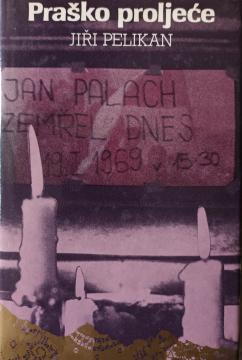
Praško proljeće

Praško proljeće

Jiri Pelikan

The book Prague Spring by Czech journalist and politician Jiří Pelikan presents a personal testimony of the events that marked Czechoslovakia in 1968.

As the director of Czechoslovak television and a member of the Communist Party, Pelikan was a direct participant in the reform movement known as the "Prague Spring", which aimed to introduce "socialism with a human face".

The book is divided into several chapters that chronologically trace the author's political development and engagement. In chapters such as "How to Become a Communist", "In Stalin's Shadow" and "With Mao and Others", Pelikan describes his ideological maturation and experiences within the communist movement. He pays special attention to the events of 1968, describing the enthusiasm and hopes that accompanied the reforms, as well as the shock and disappointment after the Soviet military intervention.

Through personal anecdotes and analyses, Pelikan provides insight into the inner workings of the political elite, bureaucracy and media of the time. His testimony is a valuable source for understanding the complexity of political processes and the struggle for democratic change within the socialist system.

The book The Prague Spring remains a significant work for anyone who wants to understand the dynamics of political change and resistance to authoritarian regimes in Central Europe during the Cold War.

Original title
S' il me tuent
Translation
Tatjana Brodnjak
Dimensions
21 x 14 cm
Pages
281
Publisher
Globus, Zagreb, 1982.
 
Latin alphabet. Hardcover with dust jacket.
Language: Croatian.

Multiple copies are available

Copy number 1

Condition:Used, excellent condition

Copy number 2

Condition:Used, very good condition
Damages or inconvenience notice:
  • Traces of patina

Copy number 3

Condition:Used, excellent condition
Discounted price: 6.244.68
25% discount is valid until 3/26/26 11:59 pm

Copy number 4

Condition:Used, excellent condition
Discounted price: 5.683.98
30% discount is valid until 3/26/26 11:59 pm
 

Are you interested in another book? You can search the offer using our search engine or browse books by category.

You may also be interested in these titles

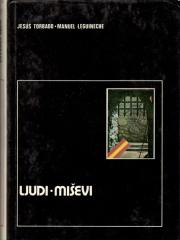
Ljudi-miševi

Ljudi-miševi

Manuel Leguineche, Jesus Torbado

The book "Mice People" by Manuel Leguineche and Jesús Torbad is an extremely powerful testimony about human destinies during and after the Spanish Civil War (1936-1939).

Alfa, 1979.
Croatian. Latin alphabet. Hardcover with dust jacket.
6.32
Radni logor Valpovo 1945.-1946.: dokumenti

Radni logor Valpovo 1945.-1946.: dokumenti

Vladimir Geiger

The Valpovo labor camp (1945–1946) was the largest camp for Volksdeutschers in Croatia after World War II. About 4,000 Germans and Austrians were interned; at least 1,074 died, mostly from hunger, disease, and exhausting labor.

Njemačka zajednica podunavskih Švaba u Hrvatskoj, 1999.
Croatian. Latin alphabet. Hardcover.
27.34
Sam protiv njih

Sam protiv njih

Roman Leljak

A non-fiction work by a Slovenian investigator of the UDB archives. The author, a former KOS employee, left the army after learning about the crimes of the Yugoslav army during the war and the post-war period, and dedicated himself to exposing the secret

Vlastita naklada, 1990.
Croatian. Latin alphabet. Paperback.
16.42
Komunizam i čovjek: Odnos vlasti i pojedinca u Hrvatskoj (1958.–1972.)

Komunizam i čovjek: Odnos vlasti i pojedinca u Hrvatskoj (1958.–1972.)

Josip Mihaljević

Josip Mihaljević's book analyzes the relationship between the government and the individual in communist Croatia (1958–1972), through repressive mechanisms, ideological pressures, and restrictions on personal freedom in the socialist system.

Hrvatski institut za povijest, 2016.
Croatian. Latin alphabet. Hardcover.
17.26
Zaraćeno poraće: Konfliktni i konkurentski narativi o stradanju i iseljavanju Talijana Istre

Zaraćeno poraće: Konfliktni i konkurentski narativi o stradanju i iseljavanju Talijana Istre

Franko Dota

The book analyzes how conflicting historical narratives about the suffering and mass emigration of Italians from Istria and Rijeka developed in Croatia and Italy after World War II (1943–1956), debunking myths and encouraging an empathetic approach to the

Srednja Europa, 2010.
Croatian. Latin alphabet. Paperback.
11.32
Sudbonosni podvig Jugoslavije: Podsjećanje na historijsko NE staljinizmu, događaj koji je opredijelio budućnost Jugoslavije

Sudbonosni podvig Jugoslavije: Podsjećanje na historijsko NE staljinizmu, događaj koji je opredijelio budućnost Jugoslavije

Raif Dizdarević

The book by Raif Dizdarević, one of the last living actors of Yugoslav diplomacy, presents his reconstruction of the most fateful moment of post-war Yugoslavia – the split with Stalin and the Informburo in 1948–1953.

Udruženje za modernu historiju (UMHIS), 2018.
Croatian. Latin alphabet. Paperback.
23.58