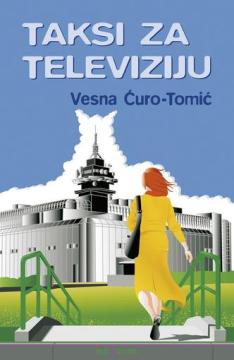
Taksi za televiziju

Taksi za televiziju

Vesna Ćuro-Tomić

Nika Gracijani lives in a world that is much more grown up, more serious and less witty than her. Among people who are incomparably better armed in the fight for survival. As a tapir among tigers, lions and most of all coyotes...

Instead of writing an engaging novel, with the character of a heroine and a sufferer, Vesna wrote a book in which the main character is just very confused. Although it houses everything.

A number of parallel stories run through Taxi for Television. One is a family story, the other is a story about childhood, and the third is about life and work at Croatian Television.

Every now and then the fourth gets involved, the husband appears who has read what was written and shares some very strange and cheerful praises and remarks.

Nika lives with her family in Velika Mlaka. Their house is ugly and dark, so it is difficult to revive it with his attention. She has never cooked the same dish twice, she likes to clean up the least, but she likes everything to be in its place.

Between the images of daily life in Zagreb, memories of childhood on the outskirts of Sarajevo, which was just about to grow up and adorn itself with neon, line up.

Nika has been working at Croatian Television for twenty years. Even in that world of bureaucracy, scheming, walking icons, angry Croatian vigilantes and faces who are always on the side of the winner - it doesn't matter if it's about war or ordering coffee - he doesn't do well.

Vesna turned a series of banal scenes into a beautiful, charming and almost tender literary text. It would be said that God gave her the naivety necessary for the building on Prisavlje to be treated as a literary fact. She says that she has always written, but never showed it to anyone.

She thinks that writing is the only talent she has, but not enough to be a writer. This is of course not true, but it sounds good.

Editor
Neven Antičević
Illustrations
Nenad Martić
Dimensions
25 x 17 cm
Pages
697
Publisher
Algoritam, Zagreb, 2004.
 
Latin alphabet. Hardcover.
Language: Croatian.
ISBN
978-9-53220-175-8

One copy is available

Condition:Unused
 

Are you interested in another book? You can search the offer using our search engine or browse books by category.

You may also be interested in these titles

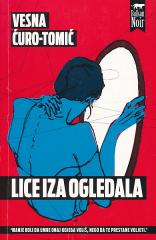
Lice iza ogledala

Lice iza ogledala

Vesna Ćuro-Tomić
24 sata, 2017.
Croatian. Latin alphabet. Paperback.
9.28
Aurorin poticaj

Aurorin poticaj

Erich Hackl

The work is based on a true event that occurred in Spain in 1933: Aurora Rodriguez killed her daughter Hildegart, a famous fighter for women's emancipation and a cult figure on the political scene of the time.

Mladost, 1990.
Croatian. Latin alphabet. Hardcover with dust jacket.
4.98
Dok ležah na samrti

Dok ležah na samrti

William Faulkner

Faulkner's 1930 novel, a classic example of modernist literature. It is often compared to Joyce's "Ulysses" for its innovative structure, but is more accessible due to its focus on family.

Rad, 1985.
Croatian. Latin alphabet. Paperback.
3.26
Rudnik čvaraka

Rudnik čvaraka

Tomislav Šovagović

The debut work of Croatian writer Tomislav Šovagović, awarded the Josip and Ivan Kozarac Award in 2012, is a dedication to Slavonia – the region of his childhood that the author, born in Dalmatia, observes with foreign but tender eyes.

Mozaik knjiga, 20112.
Croatian. Latin alphabet. Paperback.
11.56
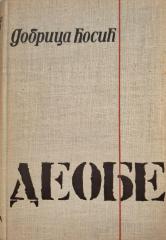
Deobe

Deobe

Dobrica Ćosić

Deobe is a novel about the tragic division of Serbs into Chetniks and Partisans during World War II. Winner of the NIN Award, it is part of a wider epic trilogy, inspired by Ćosić's experiences and historical documents.

Prosveta, 1963.
Croatian. Latin alphabet. Hardcover with dust jacket.
13.74
Deobe 1-3

Deobe 1-3

Dobrica Ćosić

This work, awarded the NIN Prize for that year, is considered one of the most significant in Serbian literature after World War II.

Prosveta, 1961.
Serbian. Cyrillic alphabet. Hardcover with dust jacket.
The book consists of 3 volumes
11.42