Taksi za televiziju

Taksi za televiziju

Vesna Ćuro-Tomić

Nika Gracijani lives in a world that is much more grown up, more serious and less witty than her. Among people who are incomparably better armed in the fight for survival. As a tapir among tigers, lions and most of all coyotes...

Instead of writing an engaging novel, with the character of a heroine and a sufferer, Vesna wrote a book in which the main character is just very confused. Although it houses everything.

A number of parallel stories run through Taxi for Television. One is a family story, the other is a story about childhood, and the third is about life and work at Croatian Television.

Every now and then the fourth gets involved, the husband appears who has read what was written and shares some very strange and cheerful praises and remarks.

Nika lives with her family in Velika Mlaka. Their house is ugly and dark, so it is difficult to revive it with his attention. She has never cooked the same dish twice, she likes to clean up the least, but she likes everything to be in its place.

Between the images of daily life in Zagreb, memories of childhood on the outskirts of Sarajevo, which was just about to grow up and adorn itself with neon, line up.

Nika has been working at Croatian Television for twenty years. Even in that world of bureaucracy, scheming, walking icons, angry Croatian vigilantes and faces who are always on the side of the winner - it doesn't matter if it's about war or ordering coffee - he doesn't do well.

Vesna turned a series of banal scenes into a beautiful, charming and almost tender literary text. It would be said that God gave her the naivety necessary for the building on Prisavlje to be treated as a literary fact. She says that she has always written, but never showed it to anyone.

She thinks that writing is the only talent she has, but not enough to be a writer. This is of course not true, but it sounds good.

Editor
Neven Antičević
Illustrationen
Nenad Martić
Maße
25 x 17 cm
Seitenzahl
697
Verlag
Algoritam, Zagreb, 2004.
 
Latein Schrift. Hardcover.
Sprache: Kroatisch.
ISBN
978-9-53220-175-8

Angeboten wird ein Exemplar

Zustand:Ungebraucht
Zum Warenkorb hinzugefügt!
 

Interessieren Sie sich für ein anderes Buch? Sie können das Angebot über unsere Suchmaschine suchen und finden oder Bücher nach Kategorien durchsuchen.

Diese Titel könnten Sie auch interessieren

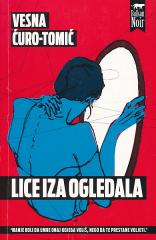
Lice iza ogledala

Lice iza ogledala

Vesna Ćuro-Tomić
24 sata, 2017.
Kroatisch. Latein Schrift. Taschenbuch.
9,28
Tri života Tonija Longina

Tri života Tonija Longina

Ivo Brešan

The novel is structured in three parts, each set in a different historical period, but all connected through the character of the main character, Toni Longino. Through these three lives, Brešan explores themes of identity, history, and the destiny of the

Europapress holding, 2005.
Kroatisch. Latein Schrift. Taschenbuch.
4,32 - 4,98
Kapetanova kći

Kapetanova kći

Aleksandar Sergejevič Puškin
Branko Đonović, 1963.
Serbisch. Latein Schrift. Hardcover.
4,62
Izgubljeni raj

Izgubljeni raj

Cees Nooteboom

One of the biggest names in contemporary world literature in the mature period of his rich writing career dabbled in fairy tales. In the acclaimed novel Paradise Lost, he weaves a seductive tale of angels, love and the search for a primal beginning.

Fraktura, 2010.
Kroatisch. Latein Schrift. Fester Einband mit Schutzumschlag.
8,32
Nicolae – Uspon Antikrista

Nicolae – Uspon Antikrista

Tim Lahaye, Jerry B. Jenkins

In Nicolae, the most explosive of the three books so far, the end of the first quarter of the seven-year martyrdom is approaching when, as the prophecy says, the "wrath of the Lamb" will descend on the earth.

Marjan tisak, 2003.
Kroatisch. Latein Schrift. Taschenbuch.
5,62
Halabuka u voćnjaku guava

Halabuka u voćnjaku guava

Kiran Desai
Algoritam, 2007.
Kroatisch. Latein Schrift. Taschenbuch.
6,884,82