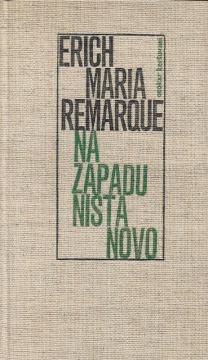
Izabrana djela 1: Na zapadu ništa novo

In the West, Nothing New follows young soldier Paul Bäumer on the battlefields of World War I. The war takes away his friends, ideals and youth, revealing all his meaninglessness and cruelty.
All Quiet on the Western Front is an anti-war novel by German writer Erich Maria Remarque, published in 1929. The main character Paul Bäumer, together with his school friends, voluntarily goes to World War I, believing the patriotic speeches of his teachers and society. However, upon arriving at the battlefield, he is faced with a reality full of fear, hunger, shelling, death and a constant feeling of meaninglessness.
Paul and his comrades watch the deaths of their friends every day and gradually lose faith in the ideals for which they went to war. Instead of glory and heroism, they find suffering, psychological trauma and a struggle for bare survival. Particularly powerful are the scenes in which Paul realizes that soldiers on both sides are equally unhappy and that they are victims of political decisions that they cannot change. When he returns home for a short time, he feels alienated because he can no longer understand life outside the battlefield. In the end, he himself is killed, and the military report of that day only notes that "there is nothing new in the West", which emphasizes how insignificant individual human life has become in the whirlwind of war.
The novel strongly condemns war, exposes its devastating consequences, and warns of the loss of humanity, youth, and hope that armed conflict brings. It is considered one of the most important anti-war works of world literature.
No copies available
The last copy was sold recently.