Književni rad u Srbiji

Književni rad u Srbiji

Grigorije Camblak
Dimensions
20.5 x 13.5 cm
Pages
170
Publisher
Srpska književna zadruga (SKZ), Beograd, 1989.
 
Distribution: 7,000 copies
 
Cyrillic alphabet. Hardcover.
Language: Serbian.
ISBN
8-60-700444-1

No copies available

The last copy was sold recently.

 

Are you interested in another book? You can search the offer using our search engine or browse books by category.

You may also be interested in these titles

Magla istorije

Magla istorije

Dobrilo Pavić

Through essays, reflections, and historical accounts, the author attempts to explain how past events have shaped the contemporary identity of peoples and societies in this region.

Komazec, 2012.
Serbian. Latin alphabet. Paperback.
5.00
Korak nazad

Korak nazad

Vlada Bulatović-Vib

Vlado Bulatović's Step Back Viba is a collection of sharp, witty and thoughtful aphorisms about man, society and government. Through satire and irony, Viba exposes the hypocrisy of the system and human weaknesses, calling for reflection and moral distance

Nolit, 1982.
Serbian. Latin alphabet. Paperback.
3.86
Proljeće u Badrovcu

Proljeće u Badrovcu

Vladan Desnica

Spring in Badrovec (1955), the first edition of a collection of short stories by Vladan Desnica. Lyrical-reflexive stories from the Dalmatian region, written by Desnica in the 1950s, focused on a Dalmatian village in post-war chaos.

Prosveta, 1955.
Croatian. Cyrillic alphabet. Hardcover.
9.58
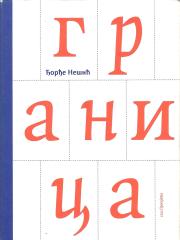
Granica

Granica

Đorđe Nešić

The collection is one of Nešić's key books from the post-war period of the 1990s, when he faced exile, minority status, and identity fractures on the border of two worlds – Croatian and Serbian, Slavonian and Danube.

SKD Prosvjeta, 2006.
Serbian. Cyrillic alphabet. Paperback with dust jacket.
8.36
Buri i Englezi

Buri i Englezi

Stevan Sremac

Stevan Sremac's humorous story "The Boers and the English" (1901.) depicts how provincial Serbs in 1899, in a tavern and with their families, passionately cheer for the Boers against the English, identifying them with themselves and the Turks.

Jež, 1947.
Serbian. Latin alphabet. Paperback.
3.26
Pokošeno polje

Pokošeno polje

Branimir Ćosić

Mown Fields (1933) represents the culmination and swan song of a life that ended too soon – the author finished the novel just five months before his death from tuberculosis, at the age of thirty-one.

Svjetlost, 1961.
Serbian. Latin alphabet. Hardcover.
The book consists of two volumes
5.34