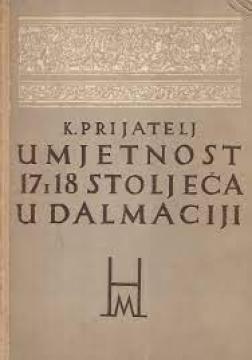
Umjetnost 17. i 18. stoljeća u Dalmaciji
Prva cjelovita sinteza barokne umjetnosti u Dalmaciji. Obuhvaća arhitekturu, kiparstvo i slikarstvo toga razdoblja s naglaskom na domaće majstore i venecijanske utjecaje. Klasično djelo hrvatske povijesti umjetnosti.
Umjetnost 17. i 18. stoljeća u Dalmaciji (1956.) predstavlja temeljno i pionirsko djelo hrvatske historiografije umjetnosti. Autor, tada mladi splitski povjesničar umjetnosti (1922.–1998.), u njemu je sažeo sustavna istraživanja baroknog razdoblja na istočnoj obali Jadrana, koja je kasnije proširio u poznatoj studiji Barok u Dalmaciji (1982.).
Knjiga donosi pregled arhitekture, kiparstva i slikarstva 17. i 18. stoljeća u Dalmaciji, od Dubrovnika i Kotora na jugu do Zadra i otoka na sjeveru. Prijatelj analizira utjecaj Venecije i protureformacije, ali posebnu pozornost posvećuje domaćim majstorima i specifičnom dalmatinskom izrazu baroka – često skromnijem, funkcionalnijem i prilagođenom lokalnim uvjetima u odnosu na raskošni talijanski barok.
U arhitekturi se obrađuju crkve, samostani, palače i fortifikacije poslije potresa i ratova, s naglaskom na majstore poput Ivana Skoke i druge domaće graditelje. U kiparstvu ističe se rad lokalnih klesara, oltara i skulptura, dok slikarstvo obuhvaća venecijanske utjecaje, radove domaćih majstora te specifične ciklusne slike i oltarne pale.
Prijateljev pristup je znanstveno precizan, ali i živ — temelji se na arhivskim istraživanjima, terenskom radu i atribucijama koje su mnoge umjetnine prvi put pravilno odredile. Knjiga je opremljena kvalitetnim ilustracijama (urednik Grgo Gamulin, ilustracije Ljubo Babić), što je u to vrijeme bilo izuzetno važno za vizualno bogato predstavljanje gradiva.
Ovo izdanje iz 1956. godine smatra se ključnim sinteznim radom koji je postavio temelje za daljnja istraživanja baroka u Dalmaciji. Danas je traženo među kolekcionarima, povjesničarima umjetnosti i ljubiteljima dalmatinske kulturne baštine. Predstavlja nezaobilazno štivo za razumijevanje razdoblja u kojem se dalmatinska umjetnost kretala između mletačke metropole, lokalne tradicije i novih duhovnih strujanja protureformacije.
Jedan primjerak je u ponudi
- Blago oštećenje korica
- Mrlje na koricama
- Žig knjižnice