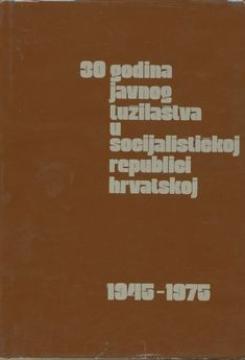
30 godina javnog tužilaštva u Socijalističkoj Republici Hrvatskoj (1945.-1975)

30 godina javnog tužilaštva u Socijalističkoj Republici Hrvatskoj (1945.-1975)

Franjo Hirjan, Branko Novaković, Ljubo Prvan, Mladen Singer, Bogumil Zuccon

Changes in this period were aimed at strengthening the role of the prosecution in the legal system and adapting to new social and political circumstances.

During the period from 1945 to 1975, the Public Prosecutor's Office of the Socialist Republic of Croatia went through several key changes:

  1. Establishment and organization: After the Second World War, in 1945, the Public Prosecutor's Office was established as part of the new socialist legal system. His role was to protect social order and the interests of the state.
  2. Reforms of the legal system: During the 1950s and 1960s, numerous legal reforms were carried out that aimed to modernize and adapt the legal system to socialist principles. This included changes in the legislation and procedures of the prosecution.
  3. Political influence: In this period, the prosecution had a significant role in the political life of the country. It was involved in trials against political opponents and in suppressing dissident activities.
  4. Education and professionalization: Increased attention has been paid to the education and professionalization of staff in the prosecutor's office. Training and specialization programs for prosecutors have been introduced to improve their expertise.
  5. Changes in legislation: Adoption of new laws and regulations, as well as changes to existing ones, affected the work of the prosecution. This included adaptation to international standards and practices.

Urednik
Željko Jovanović
Naslovnica
Ivo Vrtarić
Dimenzije
24 x 17 cm
Broj strana
150
Nakladnik
Javno tužilaštvo Hrvatske, Zagreb, 1977.
 
Latinica. Tvrde korice s ovitkom.
Jezik: Hrvatski.

Nema primjeraka u ponudi

Poslednji primjerak je nedavno prodan.
 

Zanima Vas i neka druga knjiga? Možete pretražiti našu ponudu pomoću tražilice ili prelistati knjige po kategorijama.

Možda će Vas zanimati i ovi naslovi

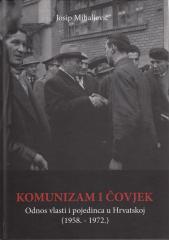
Komunizam i čovjek: Odnos vlasti i pojedinca u Hrvatskoj (1958.–1972.)

Komunizam i čovjek: Odnos vlasti i pojedinca u Hrvatskoj (1958.–1972.)

Josip Mihaljević

Josip Mihaljević's book analyzes the relationship between the government and the individual in communist Croatia (1958–1972), through repressive mechanisms, ideological pressures, and restrictions on personal freedom in the socialist system.

Hrvatski institut za povijest, 2016.
Hrvatski. Latinica. Tvrde korice.
17,26 €
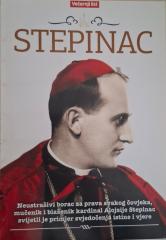
Stepinac

Stepinac

Zvonimir Despot, Jadranka Jureško-Kero, Darko Pavičić, Ljiljana Risek, Silvije Tomašević
Večernji list, 2012.
Hrvatski. Latinica. Broširano.
8,565,99 - 9,38 €
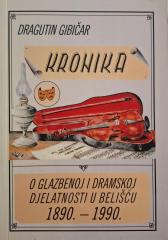
Kronika o glazbenoj i dramskoj djelatnosti u Belišću 1890.-1990.

Kronika o glazbenoj i dramskoj djelatnosti u Belišću 1890.-1990.

Dragutin Gibičar
Gradsko poglavarstvo, 2008.
Hrvatski. Latinica. Broširano.
9,98 €
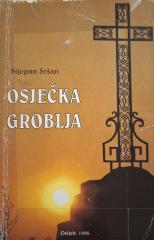
Osječka groblja

Osječka groblja

Stjepan Sršan

The book is deeply rooted in the local history and culture of Osijek, with an emphasis on cemetery motifs that serve as a metaphor for memory, death, and disappearance.

Povijesni arhiv u Osijeku, 1996.
Hrvatski. Latinica. Broširano.
5,26 €
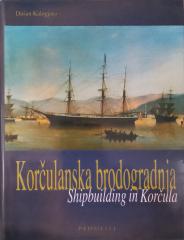
Korčulanska brodogradnja / Shipbuilding in Korčula

Korčulanska brodogradnja / Shipbuilding in Korčula

Dušan Kalogjera

The monograph Korčula Shipbuilding by Dušan Kalogjera explores the rich history of shipbuilding on the island of Korčula, a key center of Adriatic maritime tradition from the Middle Ages to the present day.

Prometej, 1998.
Hrvatski. Latinica. Tvrde korice s ovitkom.
87,32 €
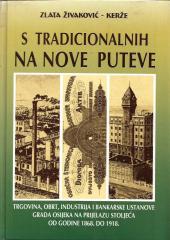
S tradicionalnih na nove puteve: Trgovina, obrt, industrija i bankarske ustanove grada Osijeka na prijelazu stoljeća od 1868. do 1918. godine

S tradicionalnih na nove puteve: Trgovina, obrt, industrija i bankarske ustanove grada Osijeka na prijelazu stoljeća od 1868. do 1918. godine

Zlata Živaković-Kerže

The book explores the economic development of Osijek after the Croatian-Hungarian Settlement until the end of World War I. Osijek, as an important center of Slavonia, experienced a significant economic boom thanks to its location on the Drava River and th

Hrvatski institut za povijest, 1999.
Hrvatski. Latinica. Tvrde korice.
11,32 €