Putovi kulture

Putovi kulture

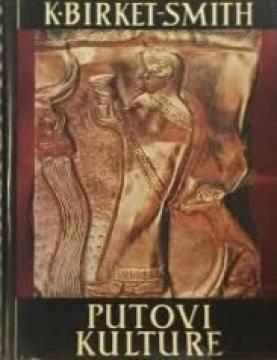
Kaj Birket-Smith

The Paths of Culture by Danish ethnologist Kaj Birket-Smith depicts the development of human cultures from prehistory to the modern era and explains how the environment, economy, and mutual contacts shape societies and their way of life.

The Paths of Culture by Danish ethnologist Kaj Birket-Smith is one of the most famous popular science works in the field of ethnology and cultural anthropology. The author attempts to explain how human cultures have developed from the earliest communities to complex civilizations, emphasizing that cultural development is not the same in all parts of the world nor does it follow a single path. Instead, different natural conditions, economic activities, social relations, and historical circumstances create a great diversity of human communities.

The book addresses fundamental questions of cultural evolution, the way of life of hunters and gatherers, the development of animal husbandry and agriculture, the emergence of settlements, trade, and the first states. Birket-Smith describes the customs, beliefs, art, technology, and social organization of numerous peoples from all continents, using examples from ethnographic research to show similarities and differences between cultures. He pays special attention to cultural contacts and the spread of ideas, emphasizing that cultures do not develop in isolation, but through the constant exchange of knowledge, objects, and customs.

The value of the publication is further enhanced by its equipment: the book contains 351 images in the text and 6 geographical maps on art paper, which enable the reader to more easily follow cultural areas, migrations and the development of human communities. The work is written in an accessible style and is intended for a wide range of readers. Although some of the author's interpretations reflect the insights of anthropology in the first half of the 20th century and are now partly outdated, the book still has great value as an overview of the development of ethnological thought and as an introduction to understanding the cultural diversity of humanity.

Titel des Originals
Geschichte der Kultur
Übersetzung
Zvonimir Golob
Editor
Oleg Mandić
Titelseite
Valerija Pavić
Maße
22 x 15 cm
Seitenzahl
539
Verlag
Matica hrvatska, Zagreb, 1960.
 
Latein Schrift. Fester Einband mit Schutzumschlag.
Sprache: Kroatisch.

Angeboten wird ein Exemplar

Zustand:Gebraucht, in gutem Zustand (Gebrauchsspuren)
Nachteile/Unannehmlichkeiten:
  • The cover is missing
  • Traces of patina
  • Library stamp
Zum Warenkorb hinzugefügt!
 

Interessieren Sie sich für ein anderes Buch? Sie können das Angebot über unsere Suchmaschine suchen und finden oder Bücher nach Kategorien durchsuchen.

Diese Titel könnten Sie auch interessieren

Kratka povijest ljudske rase

Kratka povijest ljudske rase

Michael Cook

Michael A. Cook, Princeton professor of Islamic history, provides an overview of human history from the Neolithic to the fall of the Twin Towers in 2001 in this witty and intelligent synthesis, asking the key question: why did everything happen exactly th

Profil Knjiga, 2009.
Kroatisch. Latein Schrift. Taschenbuch.
16,28
James Cook

James Cook

Werner Forman, Ronald Syme
Mladost, 1973.
Kroatisch. Latein Schrift. Fester Einband mit Schutzumschlag.
14,32
Praistorija jugoslavenskih zemalja II : Neolit

Praistorija jugoslavenskih zemalja II : Neolit

Alojz Benac
Svjetlost, 1979.
Kroatisch. Latein Schrift. Fester Einband mit Schutzumschlag.
54,96
Najveće kulture svijeta 2: Kina

Najveće kulture svijeta 2: Kina

Joachim Hildebrand

Najveće kulture sveta je zbirka od osam knjiga koje govore o velikim svetskim civilizacijama. U Hrvatskoj su knjige prvi put objavljene 2005. godine u Rijeci kod izdavača Ektrada d.o.o., ali je svih osam knjiga objavljeno i specijalno za Večernji list.

Extrade, 2005.
Kroatisch. Latein Schrift. Hardcover.
5,224,21 - 6,84
Opuscula archaeologica IV: Zlatni nakit iz helenističko-ilirske nekropole u Budvi

Opuscula archaeologica IV: Zlatni nakit iz helenističko-ilirske nekropole u Budvi

Duje Rendić-Miočević

Der Artikel präsentiert eine klassische Analyse archäologischer Funde aus der hellenistischen Zeit (3.-2. Jahrhundert v. Chr.) in der Nekropole nördlich des antiken Budva (heutiges Montenegro), die in den 1950er Jahren entdeckt wurden.

Filozofski fakultet Sveučilišta u Zagrebu, 1959.
Kroatisch. Latein Schrift. Taschenbuch.
9,36
Talisman: sveti gradovi, tajna vjera

Talisman: sveti gradovi, tajna vjera

Graham Hancock, Robert Bauval

Talisman ist eine aufregende intellektuelle Reise durch die verborgenen Gassen und unterirdischen Kanäle der Geschichte auf der Suche nach Spuren der geheimen Religion, die die Welt prägte und in Architektur und Denkmälern verborgen ist.

Stari grad, 2006.
Kroatisch. Latein Schrift. Hardcover.
24,4217,09 - 24,4617,12