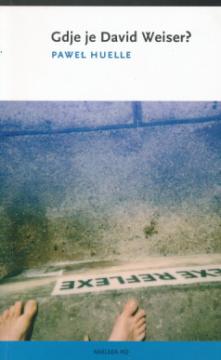
Gdje je David Weiser

Gdje je David Weiser

Pawel Huelle

"Where's David Weiser?" is a novel by Pawel Huelle that, after a three-year 'bunker' in Poland, was published in 1987 and was quickly declared the "novel of the decade" by local critics, as well as a national classic.

Where is it? or maybe Who is it? a boy who turns the forests around post-war Gdańsk and the lives of his schoolmates into a stage of dangerous games - in which the fate of entire nations, but also of each one of us, is reflected - is only the first, initial question posed by its author in this extraordinary novel. All that come will then be posed by the reader, in turn discovering once again that no answer is more valuable than the path that led to it.

The novel thematizes the growing up of a group of boys in the turbulent post-war period and is another confirmation that childhood is an inexhaustible source of inspiration and the starting point of artistic creation, with the thematization of which authors often reach their creative peaks.

Prijevod
Ivana Vidović Bolt
Urednik
Roman Simić
Ilustracije
Jasenko Rasol
Naslovnica
Igor Kuduz
Dimenzije
20 x 12,5 cm
Broj strana
249
Nakladnik
Naklada MD, Zagreb, 2005.
 
Latinica. Broširano.
Jezik: Hrvatski.
ISBN
978-9-53217-096-2

Jedan primjerak je u ponudi

Stanje:Korišteno, u odličnom stanju
Specifičnost ovog primjerka:
Posveta
Dodano u košaricu!
 

Zanima Vas i neka druga knjiga? Možete pretražiti našu ponudu pomoću tražilice ili prelistati knjige po kategorijama.

Možda će Vas zanimati i ovi naslovi

Aurorin poticaj

Aurorin poticaj

Erich Hackl

The work is based on a true event that occurred in Spain in 1933: Aurora Rodriguez killed her daughter Hildegart, a famous fighter for women's emancipation and a cult figure on the political scene of the time.

Mladost, 1990.
Hrvatski. Latinica. Tvrde korice s ovitkom.
4,98
Andrićeva lestvica užasa

Andrićeva lestvica užasa

Svetislav Basara

A Serbian writer known for his satirical novels, Andrić's Ladder of Horrors dissects the Balkan mentality through a parable of Yugo-nostalgia and national myths. The title alludes to Ivo Andrić as a litmus test for criticism – Balkans claim him or reject

24 sata, 2021.
Srpski. Latinica. Broširano.
11,56
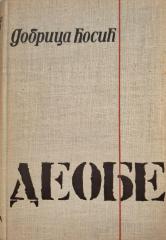
Deobe

Deobe

Dobrica Ćosić

„Deobe“ ist ein Roman über die tragische Spaltung der Serben in Tschetniks und Partisanen während des Zweiten Weltkriegs. Der mit dem NIN-Preis ausgezeichnete Roman ist Teil einer größeren epischen Trilogie, die von Ćosićs Erfahrungen und historischen Dok

Prosveta, 1963.
Hrvatski. Latinica. Tvrde korice s ovitkom.
13,74
Zagrepčanka

Zagrepčanka

Branislav Glumac

Branislav Glumac veröffentlichte 1974 einen Roman ohne Punkte und Kommas, den unerbittlichen Gedankenstrom eines jungen Rebellen. Das im sozialistischen Jugoslawien erschienene Werk löste mit seiner Offenheit einen Skandal aus und wurde zu einem Klassiker

IROS, 1986.
Hrvatski. Latinica. Tvrde korice.
8,22 - 8,24
Ulazeći u Varcar

Ulazeći u Varcar

Ivan Lovrenović

Das Hybridwerk – Roman, Gedicht und Essay in einem – ist eine Widmung an seinen Geburtsort Varcar, ein kleines Dorf in Zentralbosnien, wo sich die Wurzeln des Autors mit der Geschichte, den Mythen und dem Chaos des 20. Jahrhunderts verflechten.

Fraktura, 2016.
Hrvatski. Latinica. Tvrde korice s ovitkom.
14,42
Đavoli dolaze

Đavoli dolaze

Miodrag Bulatović
Rad, 1986.
Srpski. Latinica. Broširano.
1,16