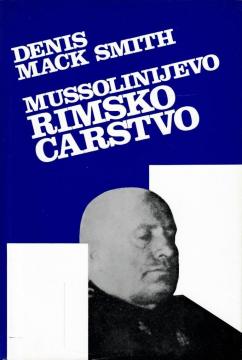
Mussolinijevo rimsko carstvo
Knjiga "Mussolinijevo rimsko carstvo" detaljna je analiza političkih ambicija i strategija Benita Mussolinija, s posebnim naglaskom na njegovo nastojanje da obnovi slavu drevnog Rimskog Carstva kroz fašističku vlast u Italiji.
Denis Mack Smith, povjesničar poznat po svojim radovima o modernoj Italiji, u ovoj knjizi kritički ispituje Mussolinijeve imperijalističke ciljeve, unutarnju politiku i međunarodne avanture.
Knjiga pokriva razdoblje Mussolinijeve vlasti, od dolaska na vlast 1922. do njegovog pada 1943. godine, fokusirajući se na njegovo neprestano pozivanje na veličinu Rimskog Carstva kao inspiraciju za fašističku Italiju. Mack Smith istražuje Mussolinijeve pokušaje stvaranja modernog "rimskog carstva" kroz vojne i političke poduhvate.
Mussolini je koristio simboliku i retoriku starog Rima kako bi legitimirao svoju vlast i inspirirao talijanski narod. Glavni cilj bio je stvoriti Italiju kao veliku svjetsku silu, konkurentnu Velikoj Britaniji i Francuskoj.
Mussolini je intenzivno koristio propagandu za slavljenje fašističkog režima, prikazujući ga kao obnovitelja rimske slave. Nacionalizam i militarizam bili su ključni za mobilizaciju podrške.
Mack Smith detaljno opisuje Mussolinijev savez s nacističkom Njemačkom i posljedice tog partnerstva, uključujući ulazak Italije u Drugi svjetski rat. Autor argumentira kako su ove odluke bile vođene Mussolinijevom željom za osobnim prestižom, a ne realnom strategijom.
Autor analizira kako su Mussolinijeve imperijalne ambicije, neuspjesi u ratu i unutarnje slabosti režima doveli do njegovog pada 1943. godine. Mack Smith ističe apsurdnost Mussolinijevih grandioznih ciljeva u odnosu na stvarne ekonomske i vojne kapacitete Italije.
Mussolini je koristio prošlost kao alat za legitimizaciju svoje vlasti, ali nije uspio ostvariti svoje ciljeve. Fašistički režim intenzivno je koristio medije i simbole kako bi stvorio iluziju moći i uspjeha. Talijanske vojne avanture bile su skupe, brutalne i uglavnom neuspješne, što je oslabilo Mussolinijev režim. Mack Smith ističe kako je Mussolini bio zarobljenik vlastitog egoizma i ambicija, što je vodilo njegovim lošim političkim i vojnim odlukama.
Denis Mack Smith piše s povijesnom preciznošću, koristeći bogatu dokumentaciju i analitički pristup. Knjiga je istovremeno kritična i objektivna, pružajući dubok uvid u Mussolinijevu politiku, dok razotkriva slabosti i paradokse fašističkog režima.
"Mussolinijevo rimsko carstvo" je ključna knjiga za razumijevanje fašističke Italije i Mussolinijevih neuspjeha u stvaranju imperijalne moći. Mack Smith nudi briljantnu analizu kako je ideologija, propaganda i političke ambicije oblikovale sudbinu Italije u prvoj polovici 20. stoljeća.
Nema primjeraka u ponudi
Poslednji primjerak je nedavno prodan.