Teror narodu: Povijest OZNE, Titove političke policije
Rare book

Teror narodu: Povijest OZNE, Titove političke policije

William Klinger

In the book, historian William Klinger investigates the origin and operation of OZNA - the brutal repressive apparatus of communist Yugoslavia, which monitored, imprisoned and liquidated political opponents.

In his book Terror to the People: The History of OZNA, Tito's Political Police, William Klinger reconstructs in detail the history of the emergence and expansion of the Yugoslav security and intelligence service founded during World War II. OZNA (Department for the Protection of the People) was the backbone of the communist repressive system that accompanied the establishment and consolidation of Josip Broz Tito's rule. Based on archival materials and testimonies, Klinger reveals how OZNA, under the guise of fighting "enemies of the people", carried out systematic surveillance, persecution and elimination of all who posed a threat to the new order.

The author presents OZNA as an organization that combined intelligence work, ideological indoctrination and repressive action, often crossing the boundaries of the law and basic human rights. Its network included thousands of associates deployed in the army, administration and party structures, and its influence extended to all spheres of society - from villages to high state institutions.

Klinger's analysis is characterized by historical precision and a documentary approach, but also by his ability to synthesize a broad context, connecting the Yugoslav case with the practices of totalitarian regimes in Europe. Terror to the People is not a mere depiction of a repressive institution, but a layered study of the relationship between ideology, power, and fear, which illuminates the dark side of the creation of the Yugoslav state and the price its citizens paid for it.

Editor
Zvonimir Despot
Dimensions
19 x 13 cm
Pages
171
Publisher
Večernji list, Zagreb, 2014.
 
Latin alphabet. Paperback.
Language: Croatian.

One copy is available

Condition:Used, excellent condition
 

Are you interested in another book? You can search the offer using our search engine or browse books by category.

You may also be interested in these titles

Doživljaji i putovanja do slobode

Doživljaji i putovanja do slobode

Vladimir Novak

The autobiographical work of Croatian communist activist Vladimir Novak, a survivor of the Ustasha camps, follows his memories of resistance to fascism during World War II.

August Cesarec, 1979.
Croatian. Latin alphabet. Hardcover with dust jacket.
8.26
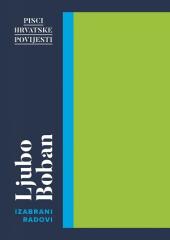
Izabrani radovi

Izabrani radovi

Ljubo Boban

Selected Works of Academician Ljubo Boban (2022) brings together key texts on contemporary Croatian history of the 20th century. The foreword by Damir Agičić highlights Boban's methodological rigor and objectivity in researching sensitive topics.

Srednja Europa, 2022.
Croatian. Latin alphabet. Hardcover.
24.52
Snažan eho brionski: Odjeci Brionskog plenuma u Bosni i Hercegovini 1966. godine

Snažan eho brionski: Odjeci Brionskog plenuma u Bosni i Hercegovini 1966. godine

Amir Duranović

Amir Duranović's book reconstructs in detail the dramatic year 1966 and the Fourth (Brion) Session of the Central Committee of the Communist Party of Yugoslavia (July 1–2, 1966), at which Aleksandar Ranković, the long-time head of the UDB and vice preside

Udruženje za modernu historiju (UMHIS), 2017.
Croatian. Latin alphabet. Paperback.
9.54
Društvo i politika

Društvo i politika

Mihailo V. Popović

The book represents a fundamental sociological and political science work that deals with the relationship between social structures and political systems, with special emphasis on Marxist theory, self-management, and the socialist society of the former

Rad, 1984.
Serbian. Latin alphabet. Paperback.
4.983.74
Put u Jajce

Put u Jajce

Edvard Kocbek

In Put u Jajce, Edvard Kocbek provides personal and political testimony about key moments in Yugoslav history. The book is based on Kocbek's memories from the Second World War, especially the trip to Jajce in 1943.

Znanje, 1978.
Croatian. Latin alphabet. Hardcover with dust jacket.
8.38
Titostalgija

Titostalgija

Mitja Velikonja

The author explores why Tito remains a popular symbol of stability, social security and independence, despite critical views of his regime. The book maps the cultural, political and everyday manifestations of "Titostalgia".

Biblioteka XX vek, 2010.
Serbian. Latin alphabet. Paperback.
7.36