Germanin ideal
Antikvitet
Rijetka knjiga

Germanin ideal

Marie Montal

Young Germaine lives a life filled with high ideals of love, faith, and purity. The novel follows her struggle between her noble dreams and the realities of life in French society at the end of the 19th century.

Germaine's Ideal is a romantic-moralistic novel by the French writer Marie Montal, published in France in 1891. A Croatian translation by Mija Geček was published in 1905 in Zagreb, published by the Catholic Press.

The novel tells the story of a young girl Germaine, whose soul is filled with high ideals – pure love, religious devotion and noble principles of life. Surrounded by the everyday life of French bourgeois society at the end of the 19th century, Germaine faces challenges in which her lofty dreams collide with reality, compromises, human weaknesses and social expectations.

The work is typical of Catholic and moralistic literature of that period: it emphasizes the values ​​of purity, sacrifice, faith and family life, and critically reflects on the superficiality and materialism of modern society. The style is gentle, somewhat sentimental and didactic, with an emphasis on the inner world of the main character and her spiritual struggle.

In Croatia (or rather the then Austro-Hungarian Empire), the book was published within the framework of Catholic publishing activities and was intended primarily for younger readers and an educated audience looking for “healthy” and uplifting literature.

Germanin ideal is a rare antiquarian edition from 1905.* Today it represents an interesting example of a translation of French Catholic prose from the turn of the century and reflects the spirit of the times in which idealism and religious morality opposed the increasingly strong secularism.

Naslov izvornika
L’idéal de Germaine
Prijevod
Mijo Geček
Dimenzije
19 x 13 cm
Broj strana
214
Nakladnik
Tisak i naklada Antuna Scholza, Zagreb, 1905.
 
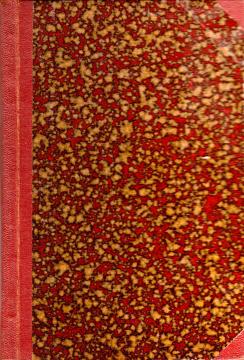
Latinica. Tvrde korice.
Jezik: Hrvatski.

Jedan primjerak je u ponudi

Stanje:Korišteno, u odličnom stanju
Specifičnost ovog primjerka:
Koričeno
Dodano u košaricu!
 

Zanima Vas i neka druga knjiga? Možete pretražiti našu ponudu pomoću tražilice ili prelistati knjige po kategorijama.

Možda će Vas zanimati i ovi naslovi

Nemeza

Nemeza

Paul Bourget

"Nemesis" is a dramatic story of a family torn apart by passion, hidden ambitions and moral decay. When the truth comes to the surface, punishment comes inexorably - from within, through their own mistakes.

Hrvatsko književno društvo Sv. Jeronima, 1932.
Hrvatski. Latinica. Tvrde korice.
6,58
Émile Zola

Émile Zola

Žerminal

In his best work, Germinal, Émile Zola realistically, in minute detail, described the inhuman living and working conditions of miners in northern France in the 1860s.

Svjetlost, 1967.
Srpski. Latinica. Tvrde korice.
4,50
Most na reci Kvaj / Dželat

Most na reci Kvaj / Dželat

Pierre Boulle

The Bridge on the River Kwai (1952) is a famous story about British prisoners who, under pressure from the Japanese, build a bridge in the jungle. The Executioner (1954) is a philosophical novella about a Chinese executioner who becomes a victim of his ow

Minerva, 1960.
Srpski. Latinica. Tvrde korice.
4,26
Dva srca: Roman jednog braka

Dva srca: Roman jednog braka

Miriam Delly

Two Hearts is a touching love story about a young French aristocrat, a widower, who wants to enter into a marriage of convenience with a young and noble girl. However, fate and true love bring him face to face with great trials...

Hrvatsko književno društvo Sv. Jeronima, 1928.
Hrvatski. Latinica. Tvrde korice.
9,34
Posljednji dani ljudi

Posljednji dani ljudi

Camille Flammarion

The second part of Flammarion's popular science work The Doom of the World (1894.). A speculative account of life on Earth in ten million years and the gradual end of humanity. Popular science with elements of science fiction.

Hrvatsko prirodoslovno društvo, 1920.
Hrvatski. Latinica. Broširano.
12,34
Propast svijeta

Propast svijeta

Camille Flammarion

The Doom of the World is the first part of Flammarion's vision of the distant future. Through scientific assumptions and philosophical reflections, he depicts the gradual weakening of the Earth and the first signs of the end of human civilization.

Hrvatsko prirodoslovno društvo, 1918.
Hrvatski. Latinica. Tvrde korice.
13,42