Urbanizacija i promet grada Osijeka na prijelazu stoljeća (1868.-1918.)

Urbanizacija i promet grada Osijeka na prijelazu stoljeća (1868.-1918.)

Zlata Živaković-Kerže

The book deals with the economic and urban development of Osijek during the key period after the Croatian-Hungarian Settlement until the end of World War I.

Osijek, as the center of Virovitica County, experienced significant progress due to its geographical position at the crossroads of Slavonian-Hungarian roads and railway routes. The book analyzes in detail the development of transport infrastructure, including the construction of the Osijek–Zagreb–Rijeka railway, bridges over the Drava River, and regulation works on the river, which facilitated trade and economic development. Special attention is paid to the urbanization of the Upper Town, where significant buildings such as the parish church of St. Peter and Paul (1894-1899), the County Palace, and the Croatian National Theater were built, reflecting the historicist and Art Nouveau styles. The author emphasizes the role of the German community and other ethnic groups in the economic and cultural life of the city, with an emphasis on banking, crafts, and industry. The book also describes the modernization of the water supply and sewage system, which made Osijek a modern city. This work, based on archival sources, provides a comprehensive overview of the transformation of Osijek into the economic, administrative, and cultural center of Slavonia.

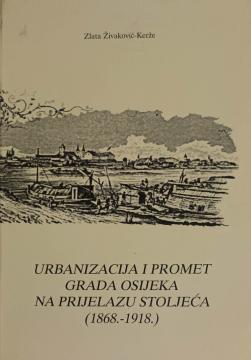
Naslovnica
Marin Topić
Dimenzije
24 x 17,3 cm
Broj strana
151
Nakladnik
Društvo za hrvatsku povjesnicu Osijek, Osijek, 1996.
 
Tiraž: 2.000 primjeraka
 
Latinica. Tvrde korice.
Jezik: Hrvatski.
ISBN
9-53-154067-5

Dva primjerka su u ponudi

Primjerak broj 1

Stanje:Korišteno, u odličnom stanju
Specifičnost ovog primjerka:
Posveta
Dodano u košaricu!

Primjerak broj 2

Stanje:Korišteno, u odličnom stanju
Dodano u košaricu!
 

Zanima Vas i neka druga knjiga? Možete pretražiti našu ponudu pomoću tražilice ili prelistati knjige po kategorijama.

Možda će Vas zanimati i ovi naslovi

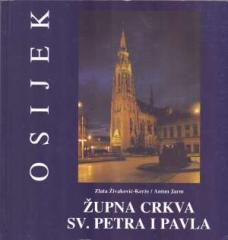
Župna crkva sv. Petra i Pavla u Osijeku

Župna crkva sv. Petra i Pavla u Osijeku

Zlata Živaković-Kerže, Antun Jarm

The book describes in detail the history, construction and significance of this neo-Gothic co-cathedral, one of the largest sacral buildings in Croatia. Located in the Upper Town of Osijek, the church is a symbol of the spiritual and cultural identity of

Rimokatolički župni ured sv. Petra i Pavla, 1995.
Hrvatski. Latinica. Broširano.
5,24 - 7,62
Kulturno-povijesna baština Osječko-baranjske županije: Kratak pogled na svjetovne i sakralne svjedoke prošlosti

Kulturno-povijesna baština Osječko-baranjske županije: Kratak pogled na svjetovne i sakralne svjedoke prošlosti

Zlata Živaković-Kerže

In the form of a short tourist guide, the cultural and historical heritage of Osijek-Baranja County is presented, namely Osijek, the county seat, and the towns and cities of Bizovac, Valpovo, Donji Miholjac, Našice, Đakovo, Aljmaš, Erdut, etc.

Turistička zajednica grada Osijeka, 2005.
Hrvatski. Latinica. Broširano.
2,89
Eufrazijeva bazilika

Eufrazijeva bazilika

Sergije Jelenić, Gianluca Benedetti
Porečka i Pulska biskupija, 2013.
Hrvatski. Latinica. Broširano.
5,98
Zagreb 1910.–1913.

Zagreb 1910.–1913.

Vjekoslav Klaić

"Zagreb 1910–1913" by Vjekoslav Klaić is a monograph on the development of Zagreb on the eve of World War I – an urban, cultural, economic and political overview of the city at the turn of the 19th and 20th centuries.

Knjižarnica Lavoslava Hartmana, 1918.
Hrvatski. Latinica. Broširano.
14,26
Creating Sacred Space with Feng Shui

Creating Sacred Space with Feng Shui

Karen Kingston

"Creating Sacred Space With Feng Shui" (1997) by Karen Kingston explores how to use feng shui and energetic space clearing to improve the quality of life.

Harmony, 1997.
Engleski. Latinica. Broširano.
17,58
Stari Zagreb

Stari Zagreb

Gjuro Szabo

A classic work of Croatian historiography, published in 1941, which provides a fascinating overview of the historical development of Zagreb, from its earliest mentions to Szabin's time, and is an indispensable source for anyone who wants to better underst

Spektar, 1971.
Hrvatski. Latinica. Tvrde korice.
11,32