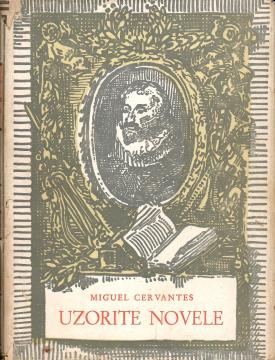
Uzorite novele: izbor

Uzorite novele: izbor

Miguel de Cervantes

The collection of twelve stories was written, in the words of the author, to entertain and educate. There are love affairs, duels, poisoning, scenes from vagabond and gypsy life, irresistibly realistic descriptions of the Lupe underground.

Cervantes introduced the short story into Spanish literature based on the Italian novellas of Boccaccio's provenance. He improved it formally and in terms of content, adding dialogues, which were almost non-existent in Italian stories, cleaning it of comments and quotes that diverted attention from the flow of the plot. He, on the other hand, enriched it with numerous episodes, without disturbing its unity, placed it in a domestic environment and removed the traces of the miraculous. The exemplary novellas are a heterogeneous set of carefully crafted narratives, and it is a real shame that they have only been partially translated into Croatian.

Naslov izvornika
Novelas ejemplares
Prijevod
Josip Tabak
Urednik
Stjepan Krešić
Naslovnica
Raul Goldoni
Dimenzije
20 x 14,5 cm
Broj strana
207
Nakladnik
Novo pokoljenje, Zagreb, 1949.
 
Latinica. Tvrde korice s ovitkom.
Jezik: Hrvatski.

Jedan primjerak je u ponudi

Stanje:Korišteno, u dobrom stanju (tragovi korištenja)
Oštećenja / nepogodnosti:
  • The cover is missing
  • Traces of patina
  • Library stamp
Dodano u košaricu!
 

Zanima Vas i neka druga knjiga? Možete pretražiti našu ponudu pomoću tražilice ili prelistati knjige po kategorijama.

Možda će Vas zanimati i ovi naslovi

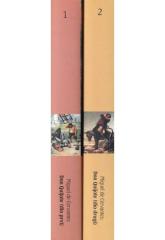
Bistri vitez Don Quijote od Manche

Bistri vitez Don Quijote od Manche

Miguel de Cervantes

Alonso Quijano, obsessed with chivalric novels, becomes Don Quixote de la Mancha. With his faithful Sancho Panza, he embarks on crazy adventures, fighting windmills and dreaming of the ideal Dulcinea.

Jutarnji list, 2004.
Hrvatski. Latinica. Broširano.
Knjiga se sastoji od dva toma
4,22 - 11,42
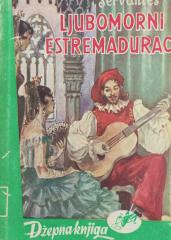
Ljubomorni Estremadurac

Ljubomorni Estremadurac

Miguel de Cervantes

The Jealous Extremaduran is a dark, psychological tale about the destructive power of jealousy. The novel is a satire on possessiveness, fear of women's freedom, and the illusion that happiness can be "locked in." One of Cervantes' most poignant "exemplar

Džepna knjiga, 1957.
Hrvatski. Latinica. Broširano.
3,72
Giocondin posmijeh i druge pripovijesti

Giocondin posmijeh i druge pripovijesti

Aldous Huxley

The Laughing of Gioconda and Other Stories (1921) is a collection of short stories by Aldous Huxley. It humorously and cynically depicts marital intrigue, the boredom of bourgeois life, human vanity, and the moral decline of modern society.

Matica hrvatska, 1939.
Hrvatski. Latinica. Tvrde korice.
11,32
Manja djela: Čudnovita dveh kaputov zmešarija Slavka / Glas od Gradne / Književno pismo / Kapetan Izailo / Mešterski list

Manja djela: Čudnovita dveh kaputov zmešarija Slavka / Glas od Gradne / Književno pismo / Kapetan Izailo / Mešterski list

August Šenoa

The twelfth volume of the Collected Works of August Šenoa – a collection of smaller prose and journalistic works: humorous stories, satire, literary letters and historical sketches from the pen of the most significant Croatian writer of the 19th century.

St. Kugli, 1931.
Hrvatski. Latinica. Tvrde korice.
12,36
Za narod i omladinu

Za narod i omladinu

Vjenceslav Novak

A collection of realistic short stories by Vjenceslav Novak with themes of social struggle, family life and the everyday lives of ordinary people. It depicts the difficult life, moral dilemmas and humanity in difficult social conditions of the 19th centur

Minerva nakladna knjižara, 133.
Hrvatski. Latinica. Tvrde korice.
6,244,99
Priče s ostrva, iz grada i sa planine

Priče s ostrva, iz grada i sa planine

Vladimir Nazor

Stories from the Island, from the City and from the Mountain (1927) is a collection of autobiographical stories by Vladimir Nazor. Divided into three cycles, it brings back memories from childhood and youth – life on an island, schooling in the city and a

Matica hrvatska, 1927.
Hrvatski. Latinica. Broširano.
11,26