Fjodor M. Dostojevski
Fyodor Mikhailovich Dostoevsky (1821–1881) was one of the most important Russian writers and thinkers of the 19th century, known for the deep psychological analysis of characters and the philosophical themes in his works. He was born in Moscow and educated at the Military Engineering Academy in Saint Petersburg. He gained recognition with his first novel, Poor Folk (1846), but was soon arrested for his participation in the Petrashevsky Circle, a group of intellectuals who criticized the tsarist regime.
After being pardoned at the last moment from death row, he spent four years in a Siberian prison, which had a profound influence on his later writing. His best-known works include Crime and Punishment, The Idiot, Evil Souls, and The Brothers Karamazov. In these novels, he explores morality, faith, free will, sin, and redemption through strong and complex characters.
Dostoevsky was also active as a journalist and essayist, and struggled with personal problems such as epilepsy, gambling addiction, and financial difficulties. His contribution to world literature is reflected in his strong influence on existentialist philosophy and modern psychology.
He died in 1881 in Saint Petersburg, and his works remain indispensable in the world's literary heritage today.
Naslovi u ponudi
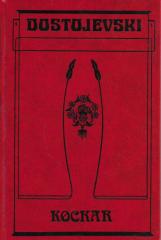
Svinjarija / Krokodil / Kockar / Vječiti muž
All the works published in this volume reflect Dostoevsky's ability to expose human frailties, social flaws and moral dilemmas through humor, satire and psychological depth, often with universal themes that still resonate today.
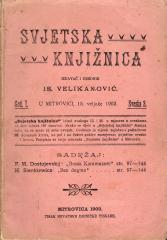
Svjetska knjižnica, Sv. 3.
The World Library, Volume 3, edited and published by Iso Velikanović, contains excerpts from The Brothers Karamazov by F. M. Dostoevsky and Without Dogma by H. Sienkiewicz. Designed for self-binding of individual works.
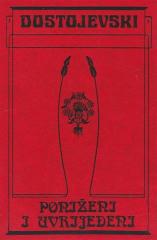
Ujakov san / Poniženi i uvrijeđeni
Both works reflect Dostoevsky's early phase, with a focus on social criticism, psychological analysis and moral dilemmas, foreshadowing the themes of his later masterpieces.
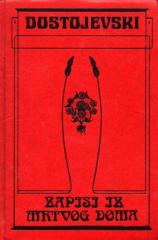
Zapisi iz mrtvog doma / Zimske bilješke o ljetnim dojmovima / Zapisi iz podzemlja
Notes from a Dead Home (1860-1862) - a novel based on the author's imprisonment in Siberia. Winter Notes on Summer Impressions (1863) - an essay from a trip to Europe in 1862. Notes from the Underworld (1864) is a philosophical novel about a man torn by i
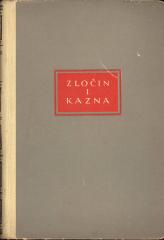
Zločin i kazna
After the impoverished student Raskolnikov commits a murder, justifying it with higher goals, his inner remorse, the psychological pressure of the investigator, and love subject him to a moral transformation.
Zločin i kazna
Crime and Punishment is a novel by Russian writer Fyodor Mikhailovich Dostoevsky, published in 1866 in the journal Russian Herald. It is considered one of the greatest works of Russian literature. The plot is set in Saint Petersburg in the mid-1860s.
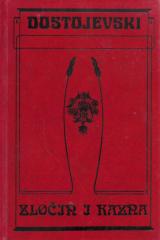
Zločin i kazna
The novel Crime and Punishment (1866) by Fyodor Mikhailovich Dostoevsky, a masterpiece of world literature, is a profound psychological and philosophical exploration of guilt, morality, and redemption.