Maksim Gorki
Maksim Gorki (pravo ime Aleksej Maksimovič Peškov) rođen je 28. marta 1868. godine u Nižnjem Novgorodu, a preminuo je 18. juna 1936. godine u Moskvi. Bio je ruski pisac, revolucionar i politički aktivista. Njegovo ime postalo je sinonim za socrealizam i književnost posvećenu radničkoj klasi.
Odrastao je u teškim uslovima, a nakon smrti roditelja bio je primoran da radi razne poslove. Snažna društvena osetljivost oblikovala je njegovo stvaralaštvo, a iskustva iz mladosti je pretočio u književna dela. Postao je jedan od ključnih ruskih pisaca tranzicije iz 19. u 20. vek i značajan ideolog socijalističkog realizma.
Njegova najznačajnija dela uključuju:
Autobiografska trilogija: Detinjstvo (1913), U svetu (1916), Moji univerziteti (1923)
Roman Mati (1906) – ključni roman socrealizma
Kratke priče i zbirke: Po Rusiji (1923), Bajke o Italiji (1911), Ruske bajke
Drama Na dnu (1902) – jedno od njegovih najpoznatijih pozorišnih dela
Gorki je bio aktivan u političkom životu, učestvovao je u revoluciji 1905. godine, živeo u egzilu i vratio se u SSSR 1932. godine, gde je postao simbol sovjetske književnosti.
Naslovi u ponudi
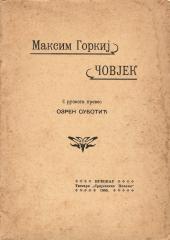
Čovjek
Čovek od Maksima Gorkog, u prevodu Ozrena Subotića (Vukovar, 1905), je filozofsko i književno delo koje veliča dostojanstvo čoveka, njegovu stvaralačku moć, slobodu duha i borbu protiv društvene nepravde.
Djela #11: Gradić Okurov / Život Matveja Kožemjakina
Priča „Gradić Okurov” je kratki roman koji je Gorki napisao 1909. godine. Rad prikazuje život malog provincijskog grada Okurova i njegovih stanovnika, fokusirajući se na monotoniju, stagnaciju i moralnu dekadenciju društva.
Djela #13: Po Rusiji
„Po Rusiji“ je zbirka priča Maksima Gorkog, objavljena između 1911. i 1917. godine. Ova zbirka sadrži priče koje oslikavaju život i duh ruskog naroda tokom previranja početkom 20. veka.
Djela #14: Bajke o Italiji / Ruske bajke / Balada o grofici Elen de Kursi
„Bajke o Italiji“ je zbirka priča Maksima Gorkog, nastala tokom njegovog boravka u Italiji početkom 20. veka. „Ruske bajke” predstavljaju Gorkijevu interpretaciju tradicionalnih ruskih narodnih bajki.
Djela #15: Pripovetke / Drame
Knjiga sadrži sledeće pripovetke i drame: Tri dana, Krađa, Zločinci, Zikovi, Lažan novac i Starac.
Djela #16: Djetinjstvo
Prvi deo autobiografske trilogije Gorkog, objavljen 1913. godine, prikazuje teško odrastanje autora pod carskim režimom. Knjiga prati Alekseja Peškova (pravo ime Maksim Gorki) od njegovog ranog detinjstva do tinejdžerskih godina.
Djela #17: U svijetu
„U svetu“ je drugi deo autobiografske trilogije Maksima Gorkog, objavljene 1916. godine. Trilogija obuhvata dela „Detinjstvo”, „U svetu” i „Moji univerziteti”, pružajući uvid u godine formiranja autora.
Djela #18: Moji univerziteti
Pored autobiografskog dela „Moji univerziteti“, ovaj tom sadrži i autobiografske pripovetke Stražar, Koroljenkovo doba, O šteti filozofije i O prvoj ljubavi.
Djela #7: U Americi / Moji intervjui / Vojnici / Neprijatelji
Maksim Gorki je boravio u Sjedinjenim Američkim Državama 1906. godine. Tokom ovog perioda, napisao je nekoliko dela, uglavnom kao odgovor na neuspeh Ruske revolucije 1905.