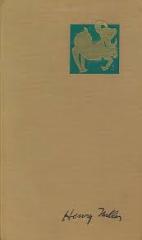
Henry Miller

Henry Miller (1891–1980) called his novel Tropic of Cancer and gave his narrator the freedom to move sideways. He starts describing lunch in Paris, remembers a friend he owes money to, and by the end of the paragraph is discussing the collapse of civilisation. Lunch, if there is any, will have to wait.
Born in New York and raised in Brooklyn, Miller worked at various jobs before he could live by writing, including a stint at Western Union. In 1930 he moved to Paris, where money was scarce and he met the writer Anaïs Nin, who supported his work. Tropic of Cancer was published there in 1934. Cheap rooms, cafés and conversations among people who have no idea what they’ll live on next week became the material for a novel in which autobiography, fiction and essay mingle freely.
In Black Spring (1936), the Parisian present keeps giving way to memories of Brooklyn. Tropic of Capricorn (1939) returns to Miller’s American years and his time at the telegraph company. He wrote openly about sex, with little regard for what could then make it into print. When Tropic of Cancer was published in the United States in 1961, court cases followed. A 1964 ruling by the US Supreme Court protected the book. The argument over what counted as decent lasted longer than quite a few of the friendships Miller describes.
A trip through Greece inspired The Colossus of Maroussi (1941), a travel book in which portraits of people keep taking the place usually reserved for the sights. Miller later settled in California, lived for years in Big Sur and painted watercolours. In The Rosy Crucifixion, the trilogy consisting of Sexus (1949), Plexus (1953) and Nexus (1960), he returned to his own life, his marriage and the years he spent trying to become a writer. Readers soon get used to Miller’s detours. Sometimes it takes a few more pages to realise that what looked like a digression was the reason for telling the story in the first place.
Naslovi u ponudi
Rakova obratnica
Ovo je optužba, kleveta, osobna uvreda. Ovo nije knjiga, u običnom smislu te riječi. Ne, ovo je neprekidno vrijeđanje, ispljuvak u lice Umjetnosti, noga u tur Bogu, Čovjeku, Sudbini, Vremenu, Ljubavi, Ljepoti…čemu god hoćete.

Rakova obratnica
Ovo je optužba, kleveta, osobna uvreda. Ovo nije knjiga, u običnom smislu te riječi. Ne, ovo je neprekidno vrijeđanje, ispljuvak u lice Umjetnosti, noga u tur Bogu, Čovjeku, Sudbini, Vremenu, Ljubavi, Ljepoti…čemu god hoćete.
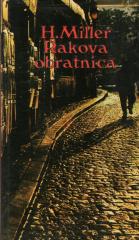
Rakova obratnica
Ovo je optužba, kleveta, osobna uvreda. Ovo nije knjiga, u običnom smislu te riječi. Ne, ovo je neprekidno vrijeđanje, ispljuvak u lice Umjetnosti, noga u tur Bogu, Čovjeku, Sudbini, Vremenu, Ljubavi, Ljepoti…čemu god hoćete.

Rakova obratnica
This is an accusation, a slander, a personal insult. This is not a book, in the ordinary sense of the word. No, this is a continuous insult, a spit in the face of Art, a kick in the ass to God, Man, Fate, Time, Love, Beauty...whatever you want.

Ružičasto raspeće III: Nexus
Nexus, (1960), the final installment of the Pink Crucifixion trilogy, continues the autobiographical narrative from Sexus and Plexus. The novel follows Miller's alter ego in 1920s New York, focusing on his inner development, relationships, and artistic qu

Ružičasto raspeće II: Plexus
Plexus (1953), drugi dio trilogije, nastavlja autobiografsku priču započetu u Sexusu. Roman se fokusira na Millerov život u New Yorku 1920-ih, istražujući njegovu umjetničku potragu, odnose i borbu za slobodu od društvenih konvencija.